Sfouf is one of Morocco’s most beloved traditional sweets. Also known as Sellou or Zmita in some Moroccan traditions, this rich and fragrant mixture combines roasted flour, toasted sesame seeds, almonds, honey, butter, and warm spices.
The result is a dense, crumbly, and aromatic Moroccan sweet with a rich nutty flavor. It requires no complicated shaping or baking, making it a practical dessert to prepare at home.
Traditionally served during Ramadan, Eid, family gatherings, and special occasions, Sfouf is also enjoyed with Moroccan mint tea.
The combination of roasted ingredients, almonds, sesame seeds, cinnamon, and orange blossom water gives this Moroccan specialty its distinctive flavor.
What Is Moroccan Sfouf?
Moroccan Sfouf is a traditional sweet mixture made primarily from roasted flour, almonds, sesame seeds, sugar, butter, and honey.
First, the flour is carefully roasted until it develops a light golden color and a pleasant toasted aroma.
Next, almonds and sesame seeds are toasted to intensify their natural flavors.
The roasted ingredients are then combined with powdered sugar and aromatic spices such as cinnamon and anise.
Finally, melted butter and honey are gradually incorporated until the mixture reaches the desired texture.
The result is a rich Moroccan dessert that is crumbly, nutty, fragrant, and lightly sweet.
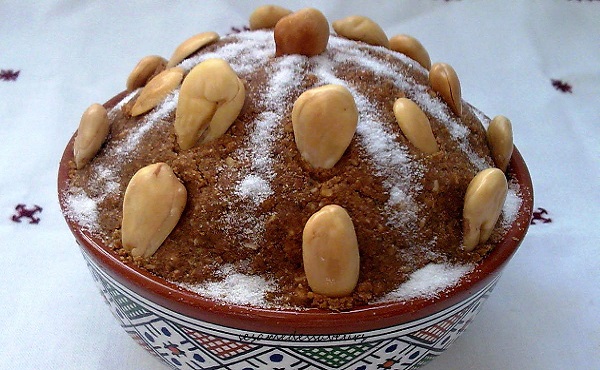
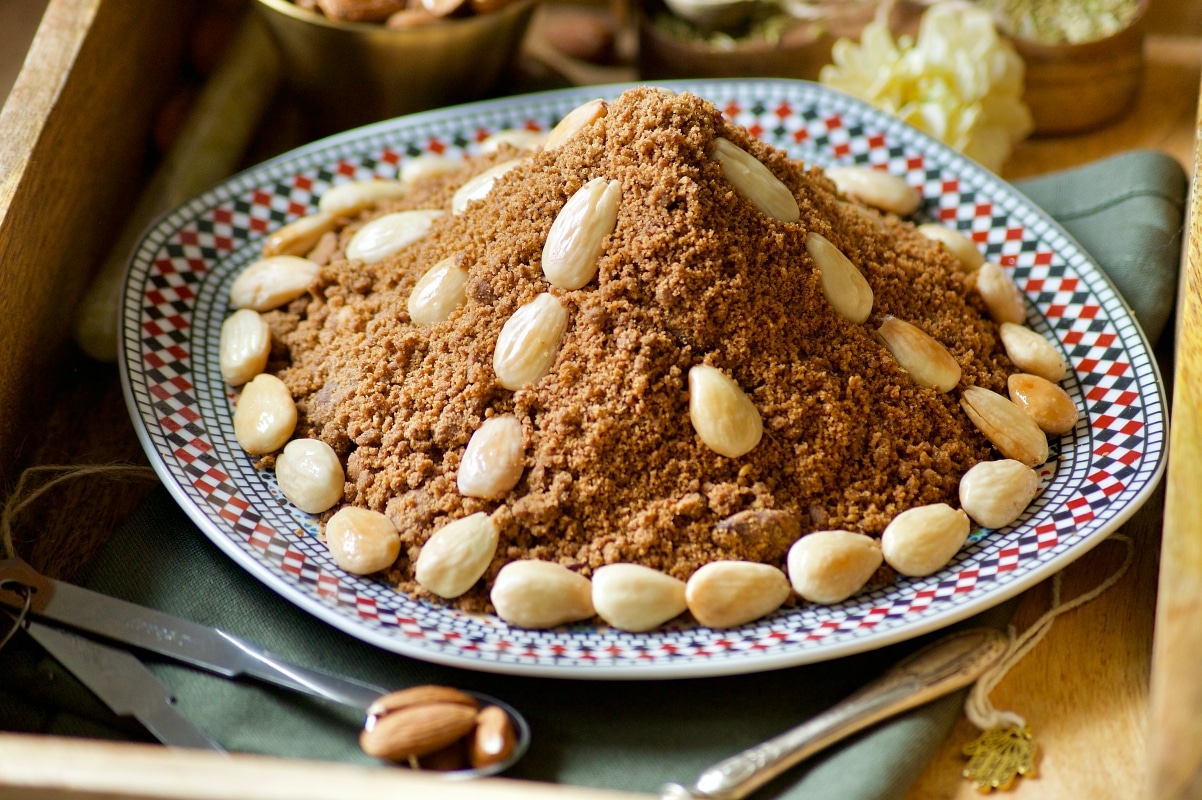
Sfouf is often shaped into a mound or pressed into a serving dish and decorated with almonds or sesame seeds.
Unlike cakes or pastries that require baking after assembly, Sfouf is prepared by roasting the individual ingredients before mixing them together.
Why You’ll Love This Moroccan Sfouf Recipe
- 🇲🇦 A traditional Moroccan dessert
- 🌰 Packed with almonds and toasted sesame seeds
- 🌾 Made with roasted flour
- 🍯 Sweetened with honey and sugar
- 🌿 Fragrant with Moroccan spices
- ✨ Rich, crumbly, and aromatic
- 🍵 Perfect with Moroccan mint tea
- 🎉 Popular during Ramadan and celebrations
- 👨🍳 Easy to prepare at home

Ingredients
For the Sfouf
500 g all-purpose flour
150 g roasted almonds
100 g sesame seeds
150 g powdered sugar
150 g melted butter
100 g honey
2 tablespoons vegetable oil
1 teaspoon ground cinnamon
1 teaspoon anise seeds, ground
1 tablespoon orange blossom water
½ teaspoon salt
For Decoration
Whole roasted almonds
Sesame seeds
Powdered sugar
A small amount of ground cinnamon

Instructions
How to Make Moroccan Sfouf
Roast the Flour
First, place the flour in a large dry frying pan or wide heavy-bottomed pan.
Cook it over low to medium-low heat.
Stir the flour frequently so that it roasts evenly and does not burn.
Continue roasting until the flour develops a light golden color and a pleasant toasted aroma.
This process can take approximately 15–20 minutes, depending on the pan and heat level.
Be patient during this step.
The roasted flour is one of the most important components of Sfouf, so it should develop flavor without becoming dark or bitter.
Once roasted, remove the flour from the heat.
Allow it to cool completely.
For an especially smooth Sfouf, sift the cooled flour before continuing.
Roast the Almonds
If your almonds are not already roasted, place them in a dry frying pan.
Toast them gently over medium-low heat until they become golden and fragrant.
Stir them regularly to prevent burning.
Once roasted, remove them from the pan and allow them to cool.
Grind the almonds until they are finely or moderately ground.
A slightly coarse texture can provide a pleasant crunch in the finished Sfouf.
Toast the Sesame Seeds
Place the sesame seeds in a dry frying pan.
Toast them over low heat, stirring frequently.
They should become lightly golden and fragrant.
Be careful because sesame seeds can burn quickly.
Once toasted, remove them from the heat and allow them to cool.
You can leave some of the sesame seeds whole or grind part of them for a finer texture.
Combine the Dry Ingredients
Place the roasted flour in a large mixing bowl.
Add the ground almonds, toasted sesame seeds, powdered sugar, cinnamon, ground anise, and salt.
Mix everything thoroughly.
Make sure the spices and nuts are evenly distributed throughout the roasted flour.
At this stage, the mixture should already have a rich toasted aroma.
Add the Butter and Oil
Melt the butter gently.
Add the melted butter and vegetable oil to the dry mixture.
Mix thoroughly with your hands or a large spoon.
The fat helps bring the roasted ingredients together and gives Sfouf its rich, crumbly texture.
Do not add all the butter at once if you are unsure about the consistency.
Add it gradually and mix between additions.
Add the Honey and Orange Blossom Water
Warm the honey slightly if it is very thick.
Add the honey gradually to the mixture.
Then add the orange blossom water.
Mix everything until the ingredients are evenly combined.
The mixture should be moist enough to hold together when pressed but should still retain a slightly crumbly texture.
However, Sfouf should not become wet or sticky like a cake batter.
If the mixture feels too dry, add a small amount of melted butter or honey.
If it feels too soft, add a little more roasted flour or ground almonds.
Let the Sfouf Rest
Allow the mixture to rest for approximately 10–15 minutes.
This gives the ingredients time to absorb the butter, honey, and orange blossom water.
After resting, check the consistency again.
The mixture should be rich and crumbly while still holding together when gently pressed.
Shape the Sfouf
There are several ways to present Sfouf.
For a traditional presentation, place the mixture in a large serving dish.
Press it gently into the dish using the back of a spoon or your hands.
You can also shape it into a rounded mound.
Alternatively, press the Sfouf into a shallow tray and cut it into small diamond or square portions.
For individual servings, place the mixture into small dessert cups and press it gently.
Decorate the Sfouf
Once the Sfouf has been shaped, decorate the surface with whole roasted almonds.
You can also sprinkle toasted sesame seeds over the top.
A light dusting of powdered sugar can add a beautiful finishing touch.
For a more traditional appearance, arrange the almonds in a simple decorative pattern.
Finally, sprinkle a small amount of cinnamon over the surface if desired.
The Secret to Perfect Sfouf
The most important secret to good Sfouf is careful roasting.
The flour, almonds, and sesame seeds should be roasted gently.
If they are burned, the final dessert can develop a bitter taste.
Another important point is the amount of butter and honey.
Add the liquid ingredients gradually until the mixture reaches the texture you prefer.
Sfouf should be rich and crumbly rather than wet.
Finally, allow the mixture to rest before serving.
This gives the flavors time to develop and allows the ingredients to settle together.



How to Serve Moroccan Sfouf
Moroccan Sfouf is traditionally served as a sweet treat during Ramadan, Eid, family gatherings, and special occasions.
Spoon or cut the Sfouf into small portions and arrange them on a serving plate.
Most importantly, serve it with a glass of Moroccan mint tea.
The refreshing tea balances the rich sweetness and toasted flavors of the dessert beautifully.
Sfouf is also an excellent choice for:
- Moroccan family gatherings
- Ramadan evenings
- Eid celebrations
- Weddings
- Religious celebrations
- Dinner parties
- Afternoon tea
- Special occasions
- Moroccan dessert platters
Tips for Making the Best Sfouf
Roast the Flour Slowly
The flour needs enough time to develop a pleasant toasted flavor.
Therefore, use low to medium-low heat and stir frequently.
Do not rush this step by using high heat.
High heat can burn the flour before it has developed its full flavor.
Don’t Burn the Sesame Seeds
Sesame seeds toast quickly.
Keep the heat low and stir continuously.
Remove them from the pan as soon as they become lightly golden and fragrant.
Use Good-Quality Almonds
Almonds provide much of Sfouf’s rich nutty flavor.
Therefore, use fresh almonds and roast them carefully.
Stale or over-roasted almonds can affect the flavor of the entire dessert.
Add the Butter Gradually
The amount of butter required can vary slightly depending on the flour and almonds.
Add it gradually while mixing.
This gives you better control over the final texture.
Don’t Make Sfouf Too Wet
Sfouf should be rich and moist enough to hold together but should still have a delicate crumbly texture.
If you add too much honey or butter, the mixture can become heavy and sticky.
Let It Rest
A short resting period allows the ingredients to absorb the added moisture.
As a result, the texture becomes more consistent and the flavors have time to develop.
Serve Small Portions
Sfouf is rich because it contains almonds, sesame seeds, butter, and honey.
Therefore, small portions are usually enough.
Serve it alongside Moroccan mint tea for a balanced Moroccan tea-time experience.
Can I Make Sfouf Without Almonds?
Yes.
Almonds are one of the most traditional ingredients in Sfouf, but you can prepare variations using other nuts.
You can use walnuts, peanuts, or a combination of different nuts.
However, almonds provide the classic flavor and texture associated with traditional Moroccan Sfouf.
Can I Make Sfouf Without Honey?
Yes.
Honey can be reduced or replaced depending on your preferred sweetness and texture.
You can use additional powdered sugar if you want a drier and more crumbly mixture.
However, honey contributes both sweetness and moisture, so the final texture will be slightly different.
Can I Make Sfouf Without Butter?
You can adapt the recipe by using more vegetable oil.
However, butter provides a rich flavor that complements the roasted flour and almonds.
For the best traditional-style flavor, a combination of butter and oil works particularly well.
Moroccan Sfouf Variations
Classic Almond Sfouf
The classic version combines roasted flour, almonds, sesame seeds, sugar, butter, honey, and warm spices.
This is the traditional combination that gives Sfouf its rich and aromatic character.
Sfouf with More Sesame
For a stronger nutty flavor, increase the amount of toasted sesame seeds.
This creates a more pronounced sesame aroma and adds additional texture.
Walnut Sfouf
Replace some of the almonds with toasted walnuts.
The walnuts give the mixture a deeper and slightly richer flavor.
Orange Blossom Sfouf
Add a little more orange blossom water for a stronger floral Moroccan aroma.
However, use it carefully because too much orange blossom water can overpower the roasted nuts and spices.
Anise Sfouf
Increase the amount of ground anise for a more aromatic variation.
Anise pairs particularly well with the toasted sesame and Moroccan mint tea.
Individual Sfouf
Instead of serving one large mound, press the mixture into small individual molds or dessert cups.
This presentation works especially well for dinner parties and celebrations.
Diamond-Shaped Sfouf
Press the mixture firmly into a shallow tray.
Then cut it into small diamond or square portions before serving.
This creates a neat presentation that is particularly suitable for Moroccan celebrations.
Frequently Asked Questions
What is Moroccan Sfouf?
Sfouf is a traditional Moroccan sweet made from roasted flour, almonds, sesame seeds, sugar, butter, honey, and aromatic spices.
It has a rich, crumbly texture and a deep toasted flavor.
Is Sfouf the same as Sellou?
Sfouf and Sellou are closely related Moroccan preparations, and the names can vary depending on the region and family tradition.
Both commonly contain roasted flour, almonds, sesame seeds, sugar, butter, honey, and spices.
The exact ingredients and preparation methods can vary from one Moroccan household to another.
Why is the flour roasted for Sfouf?
Roasting the flour gives Sfouf its characteristic toasted flavor and aroma.
It also removes some of the raw flour taste and contributes to the dessert’s distinctive texture.
Why is my Sfouf too dry?
The mixture may be too dry if not enough butter, oil, or honey has been added.
Therefore, add a small amount of melted butter or honey and mix thoroughly.
Add it gradually so that you do not make the Sfouf too soft.
Why is my Sfouf too sticky?
Too much honey or butter can make Sfouf sticky.
If this happens, add a small amount of roasted flour or ground almonds.
Mix thoroughly until the desired crumbly texture returns.
Can I prepare Sfouf ahead of time?
Yes.
Sfouf is particularly suitable for preparing ahead because it does not need to be assembled immediately before serving.
Once prepared, allow it to cool completely and store it in an airtight container.
How long does Sfouf last?
When stored properly in an airtight container in a cool, dry place, Sfouf can keep well for several days.
Its relatively dry texture makes it convenient for preparing ahead of celebrations and family gatherings.
Is Sfouf served during Ramadan?
Yes.
Sfouf is particularly popular during Ramadan and is often prepared for family gatherings and evening meals.
It is commonly served alongside Moroccan mint tea.
Can I freeze Sfouf?
Sfouf can be frozen in a well-sealed container.
However, the texture may change slightly after freezing and thawing.
For the best texture, store it in an airtight container at room temperature for shorter periods.
Nutrition Information
Approximate nutrition per serving:
- Calories: 250–300 kcal
- Protein: 5–6 g
- Carbohydrates: 30–35 g
- Fat: 14–17 g
- Saturated Fat: 4–6 g
- Fiber: 3–4 g
- Sugar: 12–16 g
- Sodium: 30–60 mg
Nutrition information is an estimate and can vary depending on the amount of flour, almonds, sesame seeds, butter, honey, sugar, and serving size.
More Moroccan Recipes to Try
If you enjoyed this traditional Moroccan Sfouf, you can also try these Moroccan recipes:
Moroccan Fekkas
A crunchy twice-baked Moroccan cookie traditionally prepared with almonds, anise, sesame seeds, and orange blossom water.
Moroccan Chebakia
A beautifully shaped sesame pastry coated with honey and traditionally enjoyed during Ramadan.
Beghrir with Amlou
Soft Moroccan thousand-hole pancakes served with delicious almond-based Amlou and other traditional toppings.
Moroccan Mint Tea
The perfect drink to serve alongside Sfouf and other traditional Moroccan sweets.
Mhancha
A beautiful Moroccan Snake Cake made with thin pastry and a fragrant almond filling flavored with cinnamon and orange blossom water.
Final Thoughts
Moroccan Sfouf is a wonderful example of how simple roasted ingredients can create a rich and satisfying traditional dessert.
The combination of roasted flour, toasted sesame seeds, almonds, honey, butter, cinnamon, and orange blossom water creates a distinctive Moroccan flavor.
Its crumbly texture and rich nutty taste make it especially enjoyable with Moroccan mint tea.
Furthermore, Sfouf is practical to prepare because it does not require complicated pastry shaping or extensive baking.
Whether you prepare it for Ramadan, Eid, a family gathering, or simply to enjoy with tea, Sfouf brings a traditional taste of Morocco to the table.
However, the key to a delicious Sfouf is patience during the roasting process. Carefully roasted flour, almonds, and sesame seeds create the deep flavor that makes this Moroccan specialty so delicious.
Overall, Sfouf is a rich, fragrant, and satisfying Moroccan sweet that deserves a place among the country’s most beloved traditional desserts.
Serve it with freshly prepared Moroccan mint tea and enjoy this delicious taste of Moroccan tradition. 🇲🇦🌰🍯🍵


Leave a Reply