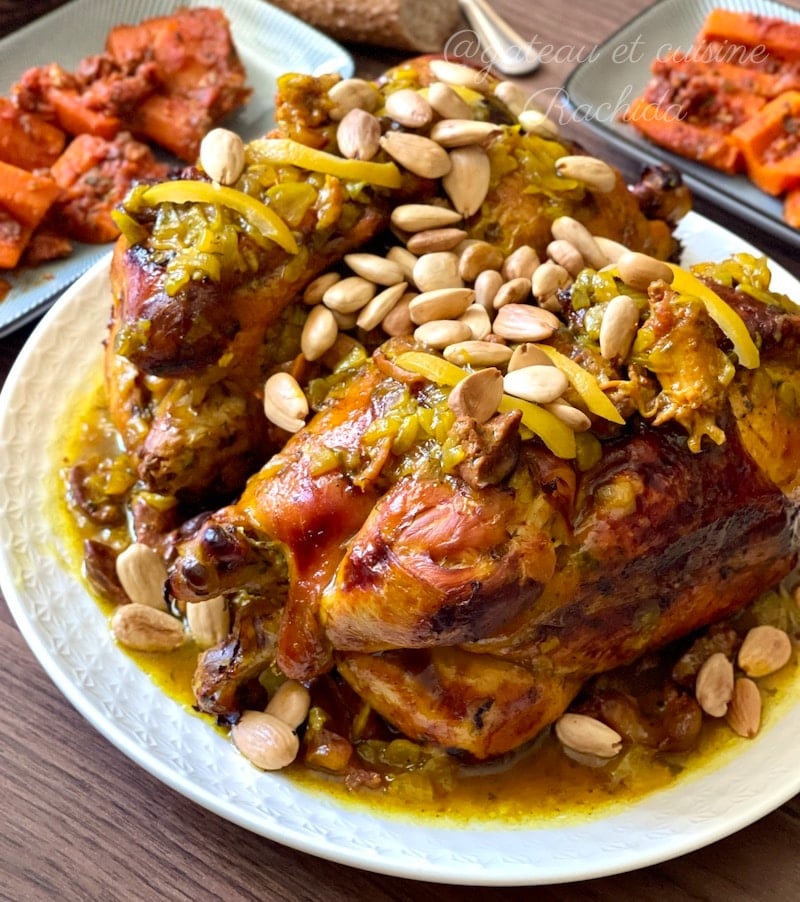
Djaj Mhammer is one of Morocco’s most beloved traditional chicken dishes. Known for its beautifully golden skin, tender meat, and rich Moroccan spices, this special roasted chicken is often prepared for family gatherings, festive meals, and celebrations.
The name Djaj Mhammer refers to Moroccan chicken that is cooked until golden and richly colored. Traditionally, the chicken is seasoned with garlic, ginger, turmeric, saffron, black pepper, and fresh herbs. It is slowly cooked until tender, then roasted or browned to develop its characteristic golden finish.
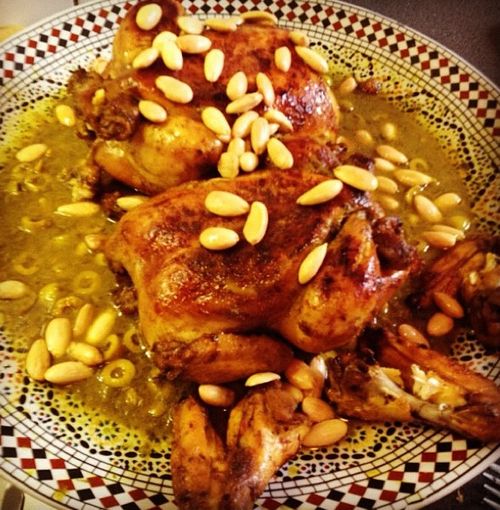
What makes Djaj Mhammer particularly delicious is the combination of fragrant spices, flavorful cooking juices, and the rich taste of Moroccan seasoning. Depending on the family recipe, it may also be served with a savory onion sauce, known as daghmira, and garnished with olives and preserved lemon.
Whether you are preparing a traditional Moroccan Sunday lunch or planning a special dinner, this Djaj Mhammer recipe brings authentic Moroccan flavors to your table.
What Is Moroccan Djaj Mhammer?
Djaj Mhammer is a traditional Moroccan chicken dish in which seasoned chicken is cooked until tender and then browned or roasted until golden. It is especially popular in Moroccan home cooking and is often served during family celebrations, festive meals, and special occasions.
The chicken is typically flavored with a mixture of garlic, ginger, turmeric, black pepper, saffron, olive oil, and fresh herbs such as parsley and cilantro.
In many traditional preparations, the chicken is first simmered with onions and spices. It is then transferred to the oven or browned separately to create a beautifully colored exterior.
The cooking liquid can be reduced into a thick, savory onion sauce called daghmira, which is served alongside the chicken. Olives and preserved lemon are also common accompaniments, adding a salty, tangy flavor that balances the richness of the dish.
Unlike a simple roast chicken, Djaj Mhammer is defined by its distinctive Moroccan spice mixture and the flavorful sauce that often accompanies it.
Why You’ll Love This Moroccan Djaj Mhammer Recipe
- 🇲🇦 A classic Moroccan chicken dish
- 🍗 Tender, juicy chicken with a golden, flavorful exterior
- 🌿 Seasoned with traditional Moroccan herbs and spices
- 🧄 Rich garlic and ginger flavors
- 🍋 Delicious with preserved lemon and olives
- 🧅 Perfect with a traditional Moroccan onion sauce
- 🎉 Ideal for family gatherings and special occasions
- 🍞 Wonderful served with fresh Moroccan bread
- 🏠 Made with accessible ingredients and simple cooking techniques

Ingredients
For the Chicken
1 whole chicken, approximately 1.5–2 kg
4–5 garlic cloves, finely crushed
2 tablespoons olive oil
1 teaspoon ground ginger
1 teaspoon turmeric
½ teaspoon ground black pepper
A small pinch of saffron threads, optional
1 teaspoon salt, or to taste
1 teaspoon ground cumin, optional
1 small bunch fresh parsley, finely chopped
1 small bunch fresh cilantro, finely chopped
1 tablespoon butter or Moroccan smen, optional
1 teaspoon lemon juice, optional
For the Onion Sauce (Daghmira)
3 large onions, finely chopped
2 garlic cloves, crushed
2 tablespoons olive oil
½ teaspoon ground ginger
½ teaspoon turmeric
A pinch of black pepper
A pinch of saffron, optional
250–400 ml water or chicken stock, as needed
1 tablespoon chopped parsley and cilantro
Salt, to taste
For Serving
Green or purple Moroccan olives
1 preserved lemon, cut into wedges
Fresh parsley or cilantro, optional
Moroccan bread, for serving

Instructions
How to Make Moroccan Djaj Mhammer
Prepare the Chicken Marinade
Begin by cleaning and preparing the chicken according to your usual food-safe method. Pat it dry with paper towels.
In a small bowl, combine the crushed garlic, olive oil, ginger, turmeric, black pepper, saffron, salt, parsley, and cilantro. Add the optional cumin and lemon juice if desired.
Mix everything into a fragrant seasoning paste.
Rub the mixture over the chicken, making sure to coat the skin and the inside of the cavity. If possible, gently loosen the skin over the breast and rub a little seasoning underneath it for extra flavor.
For the best result, cover the chicken and refrigerate it for at least 1–2 hours. If you have more time, marinating it overnight allows the flavors to develop further.
Cook the Chicken with the Onions
Place the chopped onions and crushed garlic in a large, heavy-bottomed pot or Dutch oven.
Add the olive oil, ginger, turmeric, black pepper, saffron, and a little salt. Stir well to coat the onions with the spices.
Place the seasoned chicken on top of the onions. Add the chopped herbs and approximately 250–400 ml of water or chicken stock.
Cover the pot and cook over medium-low heat until the chicken begins to become tender. Turn it occasionally and spoon some of the cooking liquid over the chicken to help it cook evenly.
The cooking time depends on the size of the chicken and the heat used. Allow approximately 45–70 minutes, checking the chicken as it cooks and adding a little water if the pot becomes too dry.
The chicken should be tender but still hold its shape before you transfer it for browning.
Prepare the Daghmira Onion Sauce
Once the chicken is cooked, carefully remove it from the pot and set it aside.
Continue cooking the onions in the remaining liquid over medium heat, uncovered. Stir regularly as the water evaporates and the onions soften.
As the mixture reduces, the onions will become concentrated, rich, and deeply flavored. Continue cooking until the sauce is thick and most of the excess liquid has evaporated.
Taste and adjust the seasoning if needed. Add a little more chopped parsley or cilantro for freshness.
If the sauce becomes too thick before the onions are completely soft, add a small splash of water and continue cooking.
The finished daghmira should be thick enough to spoon onto a serving plate without being watery.
Brown or Roast the Chicken
Preheat your oven to 200°C (400°F).
Transfer the cooked chicken to a roasting tray. Brush the skin with a little olive oil, melted butter, or Moroccan smen for a richer finish.
Roast for approximately 15–25 minutes, turning the tray if necessary, until the skin becomes golden brown and lightly crisp.
Keep an eye on the chicken during this stage because the skin can darken quickly. If the chicken is already deeply colored, reduce the oven temperature slightly.
The chicken is ready when the thickest part of the meat reaches a safe internal temperature of 74°C (165°F), measured with a food thermometer without touching the bone.
Let the chicken rest for about 10 minutes before serving so the juices can settle.
Prepare the Olives and Preserved Lemon
While the chicken is browning, prepare the traditional garnishes.
If the olives are very salty, rinse them briefly. You can warm them in a small saucepan with a spoonful of the onion sauce for extra flavor.
Cut the preserved lemon into wedges. For a milder flavor, remove some of the pulp and use the fragrant peel.
Olives and preserved lemon provide a distinctive Moroccan finish, balancing the savory chicken and rich onion sauce with salty and tangy notes.
Arrange and Serve the Djaj Mhammer
Spread the onion sauce over the bottom of a large serving platter.
Place the golden chicken on top. Arrange the olives and preserved lemon around it, then garnish with a little fresh parsley or cilantro if desired.
Serve the chicken hot with Moroccan bread, which is ideal for scooping up the rich onion sauce.
For a traditional Moroccan presentation, bring the whole chicken to the table and carve it just before serving.
The Secret to Perfect Djaj Mhammer
The secret to delicious Djaj Mhammer is to develop the flavor in stages.
First, season the chicken thoroughly and allow time for the spices to penetrate the meat. Next, cook it gently with onions, herbs, and a little liquid until tender. Finally, brown it at a higher temperature to create a beautiful golden exterior.
However, avoid roasting the chicken from the beginning at very high heat if you want the traditional tender texture and rich sauce. Cooking it gently first helps the meat stay moist while the onions develop their deep flavor.
Another important detail is the onion sauce. Give the onions enough time to soften and reduce. A watery sauce will not have the same concentrated flavor as a properly reduced daghmira.



How to Serve Djaj Mhammer
Djaj Mhammer is often served as the centerpiece of a Moroccan family meal. The golden chicken is arranged over or beside the rich onion sauce, then garnished with olives and preserved lemon.
For a traditional Moroccan meal, serve it with:
- Fresh Moroccan khobz (bread)
- Moroccan olives
- Preserved lemon
- A fresh seasonal salad
- Moroccan mint tea after the meal
Bread is particularly important because it allows everyone to enjoy the flavorful onion sauce.
You can also serve the chicken with steamed vegetables or plain rice if you prefer a more substantial side dish. Although these are convenient options, Moroccan bread is a classic accompaniment.
For a festive table, arrange the chicken on a large platter and surround it with olives and preserved lemon wedges.
Tips for Making the Best Moroccan Djaj Mhammer
Marinate the Chicken in Advance
Allowing the chicken to rest in its spice mixture for several hours improves the flavor. Overnight marinating is especially useful when preparing the dish for a celebration.
Use Fresh Garlic and Herbs
Fresh garlic, parsley, and cilantro give the marinade a bright, aromatic flavor. Dried herbs can be used if necessary, but fresh herbs are preferred in many traditional home-style preparations.
Cook the Chicken Gently
Avoid boiling the chicken vigorously. A gentle simmer helps the meat cook evenly and allows the onions to soften without scorching.
Reduce the Onion Sauce Properly
Do not rush the daghmira. The sauce should be thick, savory, and concentrated. Stir regularly toward the end of cooking to prevent the onions from sticking to the bottom of the pot.
Brown the Chicken Just Before Serving
Roast the chicken after it has cooked through. This creates a golden finish without drying out the meat during a long roasting period.
Balance the Salt
Preserved lemon and olives can be quite salty. Taste the sauce before adding extra salt, especially if you plan to serve the chicken with these traditional garnishes.
Let the Chicken Rest
After roasting, let the chicken rest for around 10 minutes before carving. This helps retain its juices and improves the texture.
What Is Daghmira?
Daghmira is a rich Moroccan onion sauce commonly served with chicken dishes, including many versions of Djaj Mhammer.
It is made by cooking finely chopped onions with garlic, oil, spices, and the flavorful liquid released during the cooking process. The onions are cooked slowly until soft and then reduced until the mixture becomes thick and concentrated.
The sauce is important because it adds moisture and deep flavor to the chicken. It also makes the dish especially delicious when eaten with Moroccan bread.
Some family recipes make the sauce very thick, while others leave it slightly looser. The consistency depends on personal preference and how long the onions are cooked.
Can I Make Djaj Mhammer Without a Whole Chicken?
Yes. You can prepare Djaj Mhammer using chicken thighs, drumsticks, or a mixture of bone-in chicken pieces.
Bone-in pieces generally stay juicier and develop more flavor than very lean boneless cuts. They also work well with the onion sauce.
Adjust the cooking time according to the size of the pieces. Smaller portions will cook more quickly than a whole chicken, so check them regularly and use a food thermometer to confirm that the thickest part reaches 74°C (165°F).
You can follow the same method: season the chicken, cook it gently with onions and spices, reduce the sauce, and brown the chicken before serving.
Can I Make Djaj Mhammer Without Preserved Lemon?
Yes. Preserved lemon is a popular garnish, but it is not essential to every version of Djaj Mhammer.
If you do not have it, serve the chicken with olives and add a small squeeze of fresh lemon juice at the end if desired. Fresh lemon will provide acidity, although its flavor is different from the distinctive salty, fermented taste of preserved lemon.
For a more traditional presentation, use preserved lemon whenever it is available.
Can I Prepare Djaj Mhammer Ahead of Time?
Yes. You can cook the chicken and onion sauce a day in advance.
Allow the food to cool promptly, then refrigerate it in covered containers. Keep the chicken and sauce together or store them separately, depending on how you plan to reheat them.
When ready to serve, reheat the chicken and sauce thoroughly. Then transfer the chicken to a hot oven for a short period to refresh its golden exterior.
Avoid leaving cooked chicken at room temperature for extended periods. Refrigerate leftovers within two hours, and reheat them until steaming hot throughout.
Moroccan Djaj Mhammer Variations
Classic Djaj Mhammer
The classic preparation uses chicken, garlic, ginger, turmeric, black pepper, saffron, olive oil, and fresh herbs. It is cooked until tender and browned before serving.
Djaj Mhammer with Daghmira
In this popular home-style version, the chicken is served over a thick, richly flavored onion sauce. The sauce is often the highlight of the meal.
Djaj Mhammer with Olives and Preserved Lemon
Olives and preserved lemon add the salty, tangy flavors commonly associated with Moroccan chicken dishes. Arrange them around the chicken just before serving.
Saffron Djaj Mhammer
A small pinch of saffron adds a delicate aroma and warm golden color. Because saffron is potent, use it sparingly so that it complements rather than overwhelms the other spices.
Individual Portions of Djaj Mhammer
For smaller meals or dinner parties, use chicken thighs or drumsticks instead of a whole chicken. This makes serving easier while preserving the traditional flavors.
Frequently Asked Questions
What does Djaj Mhammer mean?
Djaj means chicken in Moroccan Arabic, while mhammer refers to a browned or golden preparation. Djaj Mhammer is therefore a Moroccan chicken dish cooked with spices and finished until golden.
Is Djaj Mhammer the same as Moroccan roast chicken?
They are similar, but Djaj Mhammer is distinguished by its Moroccan seasoning and its traditional preparation. Many versions involve gently cooking the chicken with spices and onions before browning it, often with a rich onion sauce served alongside.
What spices are used in Djaj Mhammer?
Common seasonings include garlic, ginger, turmeric, black pepper, saffron, salt, parsley, and cilantro. The exact combination varies by family and region.
Why is my Djaj Mhammer dry?
The chicken may become dry if it is cooked for too long or roasted at high heat throughout the entire process. Cook it gently until tender, then brown it briefly at a higher temperature. Allowing it to rest before carving also helps retain moisture.
How do I make the onion sauce thick?
Cook the onions slowly in the cooking liquid without a lid, stirring frequently as the liquid evaporates. Continue until the onions become soft and the sauce is thick and concentrated. If the mixture dries out too soon, add a small amount of water.
Can I use chicken pieces instead of a whole chicken?
Yes. Bone-in thighs and drumsticks are excellent alternatives. Reduce the cooking time as needed and check that the thickest part of each piece reaches 74°C (165°F).
What should I serve with Djaj Mhammer?
Moroccan bread, olives, and preserved lemon are classic accompaniments. A fresh salad or cooked vegetables can also complete the meal.
Can I freeze Djaj Mhammer?
Yes. Once cooled, the cooked chicken and onion sauce can be frozen in airtight, freezer-safe containers. For best quality, use within about 2–3 months. Thaw in the refrigerator and reheat thoroughly before serving. The skin may lose some crispness after freezing, so finish the chicken in a hot oven if you want to refresh its color.
Nutrition Information
Approximate nutrition per serving:
- Calories: 350–450 kcal
- Protein: 35–45 g
- Carbohydrates: 8–15 g
- Fat: 18–28 g
- Saturated Fat: 4–7 g
- Fiber: 2–4 g
- Sugar: 4–7 g
- Sodium: 500–800 mg
Nutrition values are estimates and vary depending on the size of the chicken portion, whether the skin is eaten, the amount of oil used, and the addition of olives or preserved lemon. Serving bread will increase the total calories and carbohydrates.
More Moroccan Recipes to Try
If you enjoy Djaj Mhammer, explore these other Moroccan favorites:
- Traditional Moroccan Chicken Tagine – A fragrant chicken dish slowly cooked with Moroccan spices and vegetables.
- Moroccan Msemen – Flaky, layered Moroccan flatbread that is delicious with savory dishes.
- Moroccan Mint Tea – A refreshing traditional drink to serve after a Moroccan meal.
- Moroccan Harira – A comforting tomato, lentil, and chickpea soup often enjoyed during Ramadan.
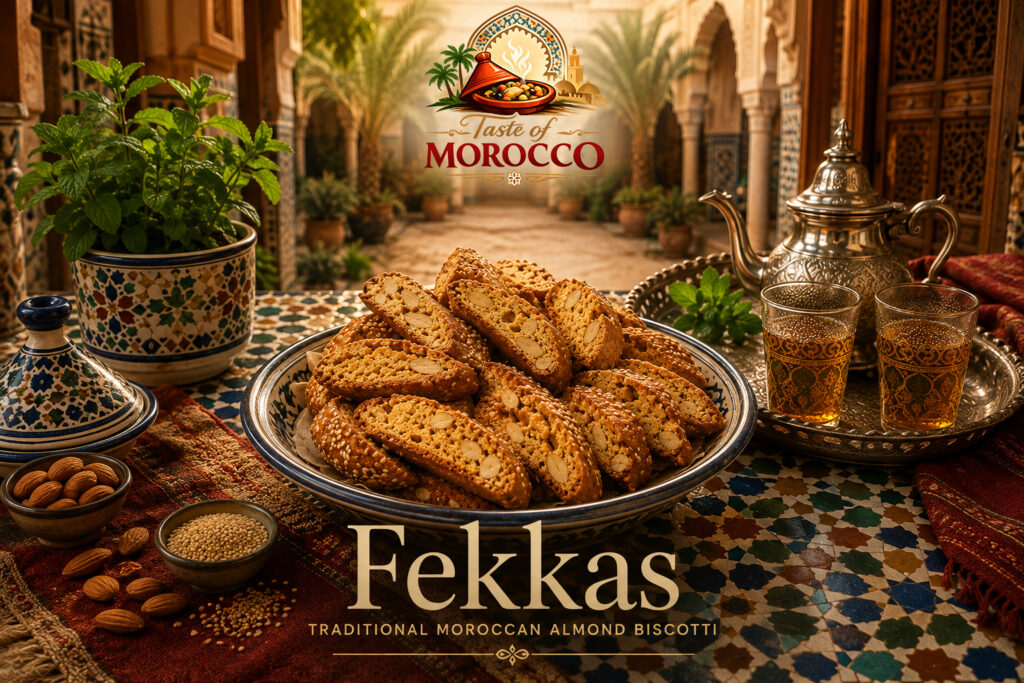
- Moroccan Fekkas – Crunchy, twice-baked Moroccan cookies that pair beautifully with mint tea.
Final Thoughts
Djaj Mhammer is a wonderful example of the depth and warmth of Moroccan home cooking. The combination of tender chicken, fragrant spices, soft onions, and a golden roasted finish creates a meal that feels both comforting and festive.
The onion sauce adds another layer of flavor, while olives and preserved lemon bring a distinctive Moroccan touch. Although the dish is often served at celebrations, it can also be prepared at home for a memorable family dinner.
Whether you serve it for a special occasion or a weekend meal, take your time with the seasoning, cook the chicken gently, and allow the onion sauce to reduce until rich and flavorful.
Overall, Djaj Mhammer is a delicious way to bring the traditional flavors of Morocco to your table. Serve it hot with fresh Moroccan bread, share it with family and friends, and enjoy this classic Moroccan chicken dish. 🇲🇦🍗


Leave a Reply