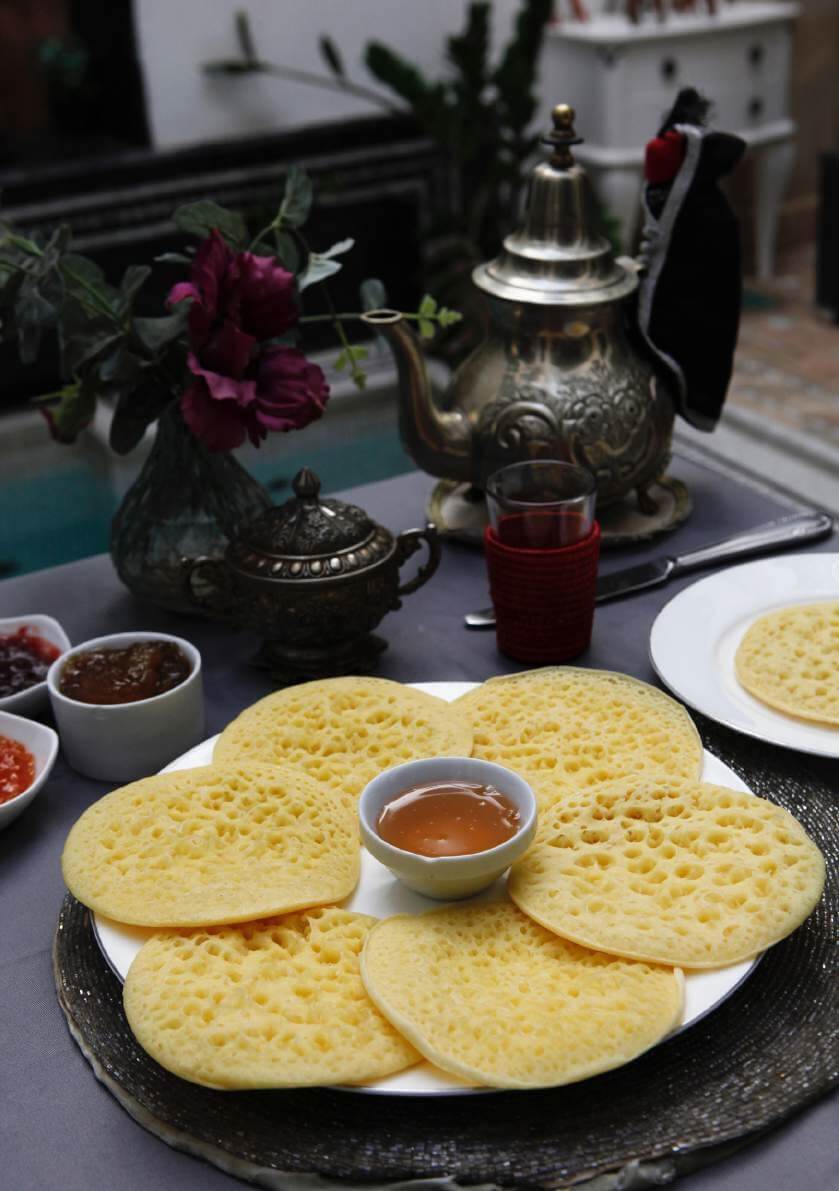
Moroccan Beghrir with Amlou is a delicious combination that is perfect for breakfast or afternoon tea. Beghrir, also known as Moroccan 1001-hole pancakes, are soft, light, and wonderfully spongy. As they cook, hundreds of tiny holes appear across the surface. As a result, they are perfect for soaking up honey, butter, or creamy Amlou.
Amlou is a traditional Moroccan spread made with roasted almonds, argan oil, and honey. Together, these two Moroccan specialties create a simple yet incredibly flavorful dish. In addition, both are traditionally enjoyed with Moroccan mint tea.
What Is Beghrir?
Beghrir is a traditional Moroccan pancake made primarily with fine semolina, flour, yeast, and water. Unlike regular pancakes, Beghrir is cooked on one side only.
As the batter cooks, hundreds of small holes appear on the surface. These holes are what give Beghrir its famous nickname, “1001-hole pancakes.”
The finished pancakes are soft, slightly chewy, and perfect for soaking up butter, honey, or Amlou.
What Is Amlou?
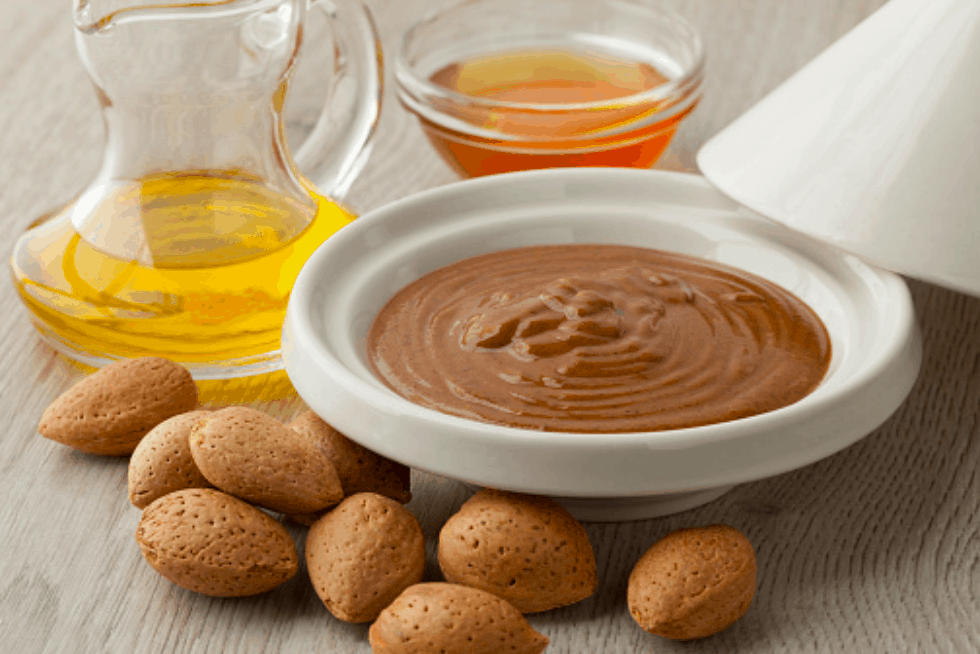
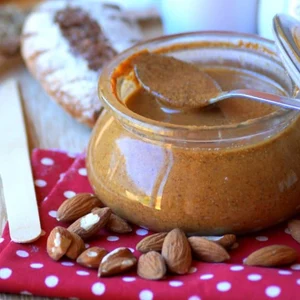
Amlou is a traditional Moroccan almond spread made with three simple ingredients:
- Roasted almonds
- Moroccan argan oil
- Honey
The almonds are roasted until fragrant and then we ground it into a smooth or slightly textured paste. Argan oil gives Amlou its distinctive rich flavor, while honey adds natural sweetness.
Amlou is especially popular in southern Morocco, where argan trees are native.
Why You’ll Love Beghrir with Amlou
- 🇲🇦 A classic Moroccan breakfast
- 🥞 Light, soft, and naturally spongy
- 🕳️ Famous for its hundreds of tiny holes
- 🌰 Rich homemade almond Amlou
- 🍯 Naturally sweetened with honey
- 🍵 Perfect with Moroccan mint tea
- ❤️ Great for breakfast, brunch, or afternoon tea

Ingredients
For the Beghrir
250 g fine semolina
50 g all-purpose flour
1 teaspoon dry yeast
1 teaspoon baking powder
1 tablespoon sugar
½ teaspoon salt
500–550 ml warm water
1 teaspoon orange blossom water, optional
For the Amlou
200 g raw almonds
80–100 ml argan oil
2–3 tablespoons honey
A small pinch of salt

Instructions
Prepare the Beghrir Batter
Add the fine semolina, flour, sugar, dry yeast, baking powder, and salt to a blender.
Pour in the warm water gradually and blend for about 1–2 minutes until the batter becomes completely smooth.
The batter should be thinner than ordinary pancake batter.
If you want an extra Moroccan aroma, add a little orange blossom water.
Let the Batter Rest
Pour the batter into a bowl and cover it.
Leave it somewhere warm for approximately 20–30 minutes.
You should notice that the batter becomes slightly bubbly.
This resting period helps the yeast develop and contributes to the characteristic holes on the surface.
Cook the Beghrir
Heat a non-stick skillet or traditional Moroccan pan over medium heat.
Lightly grease the pan if necessary.
Pour a small ladleful of batter into the center and allow it to spread naturally.
Do not flip the Beghrir.
As it cooks, tiny holes will begin appearing across the entire surface.
Continue cooking until the top is completely dry and the bottom is lightly golden.
Remove it from the pan and allow it to cool slightly.
Repeat with the remaining batter.
Important Tip
Do not stack the Beghrir while they are still very hot. Place them separately until they cool slightly so they don’t stick together.
How to Make Homemade Amlou1. Roast the Almonds
Preheat your oven to 180°C (350°F).
Spread the almonds on a baking tray and roast them for approximately 10–15 minutes.
Keep an eye on them because almonds can burn quickly.
They should become golden and fragrant.
Allow them to cool completely.
Grind the Almonds
Place the roasted almonds into a food processor.
Blend until they become a fine almond meal.
Continue processing until the almonds begin releasing their natural oils and turn into a thick almond paste.
Depending on your food processor, this can take several minutes.
Add the Argan Oil
Gradually pour in the argan oil while continuing to blend.
Keep processing until the mixture reaches your preferred consistency.
For a rustic Amlou, leave it slightly textured.
For a smoother spread, continue blending longer.
Add Honey
Transfer the almond mixture to a bowl and stir in the honey.
Taste and adjust the sweetness according to your preference.
Add a tiny pinch of salt to balance the flavors.

Serving Moroccan Fekkas Recipe
Tips for Perfect Beghrir
Use Fine Semolina
Fine semolina gives Beghrir its characteristic texture. Coarse semolina can make the pancakes heavier.
Don’t Make the Batter Too Thick
The batter should be relatively thin and pour easily.
If it seems too thick, then add a little warm water.
Don’t Flip Them
This is one of the most important differences between Beghrir and ordinary pancakes.
Beghrir are cooked on one side only.
The steam and heat from the pan cook the top while creating the famous holes.
Keep the Heat Moderate
If the pan is too hot, the bottom will brown before the holes have enough time to form.
Medium heat works best.
Don’t Grease the Pan Too Much
A non-stick pan generally works best with little or no oil.
Too much oil can prevent the characteristic holes from developing properly.
Why Doesn’t My Beghrir Have Holes?
If your Beghrir aren’t developing enough holes, several things could be responsible.
The batter may be too thick. Add a little water to thin it.
The pan may be too hot. Reduce the heat and allow the holes to develop more slowly.
The batter may not have rested enough. Give it another 10–15 minutes.
Also make sure your yeast and baking powder are still active.
How to Store Beghrir
Beghrir are best when freshly made, but they can be stored in an airtight container in the refrigerator for up to 2–3 days.
To serve them again, gently warm them in a pan or microwave.
You can also freeze Beghrir. Place parchment paper between the pancakes before freezing so they don’t stick together.
How to Store Amlou
Store homemade Amlou in a clean, airtight jar.
Keep it in a cool, dry place or refrigerate it for longer storage.
Because the natural oils can separate, stir the Amlou before serving.
Frequently Asked Questions
Why is Beghrir called 1001-hole pancakes?
Beghrir develops hundreds of tiny holes across its surface while cooking. Because of this distinctive appearance, it is commonly known as Moroccan 1001-hole pancakes.
Do you flip Beghrir?
No. Traditional Beghrir is cooked on one side only.
What is Amlou made from?
Traditional Amlou is made from roasted almonds, argan oil, and honey.
Can I use another oil instead of argan oil?
You can technically substitute another neutral oil, but authentic Amlou gets much of its distinctive flavor from Moroccan argan oil.
Can I make Beghrir without yeast?
Some recipes rely primarily on baking powder, but traditional Beghrir commonly uses yeast. Yeast helps create its characteristic texture and holes.
What do Moroccans eat Beghrir with?
Beghrir is commonly served with honey, butter, Amlou, or combinations of these. It is particularly popular alongside Moroccan mint tea.
Nutrition Information
Approximate nutrition per serving of Beghrir with Amlou:
- Calories: 240 kcal
- Protein: 6 g
- Carbohydrates: 31 g
- Fat: 11 g
- Saturated Fat: 1.5 g
- Fiber: 3 g
- Sugar: 8 g
- Sodium: 180 mg
Nutrition information is an estimate and will vary depending on portion size and the amount of Amlou used.
Final Thoughts
Beghrir with Amlou is one of those Moroccan combinations that proves simple ingredients can create something incredibly special.
The soft, airy texture of the 1001-hole Beghrir pairs perfectly with the roasted almonds, argan oil, and honey in traditional Amlou. Served alongside a glass of Moroccan mint tea, it makes a wonderful breakfast or afternoon treat.
Whether you’re discovering Moroccan cuisine for the first time or recreating a familiar favorite from home, this recipe brings the flavors of Morocco straight to your kitchen. 🇲🇦🥞🍯
More Moroccan Recipes to Try
If you enjoyed this Moroccan Beghrir with Amlou, discover more traditional Moroccan recipes from Taste of Morocco:
- Moroccan Mint Tea – Learn how to prepare Morocco’s famous sweet mint tea, the perfect drink to serve alongside Beghrir.
- Msemen – Try these traditional Moroccan square pancakes, crispy on the outside and soft and flaky inside.
- Harcha – A delicious Moroccan semolina flatbread that makes another excellent breakfast or tea-time treat.
- Sellou – Discover this traditional Moroccan roasted flour and nut mixture, especially popular during Ramadan and celebrations.
- Baghrir – Learn more about the classic Moroccan 1001-hole pancake and different ways to serve it.
- Moroccan Msemen with Honey – Another delicious Moroccan breakfast option served warm with sweet toppings.

Leave a Reply