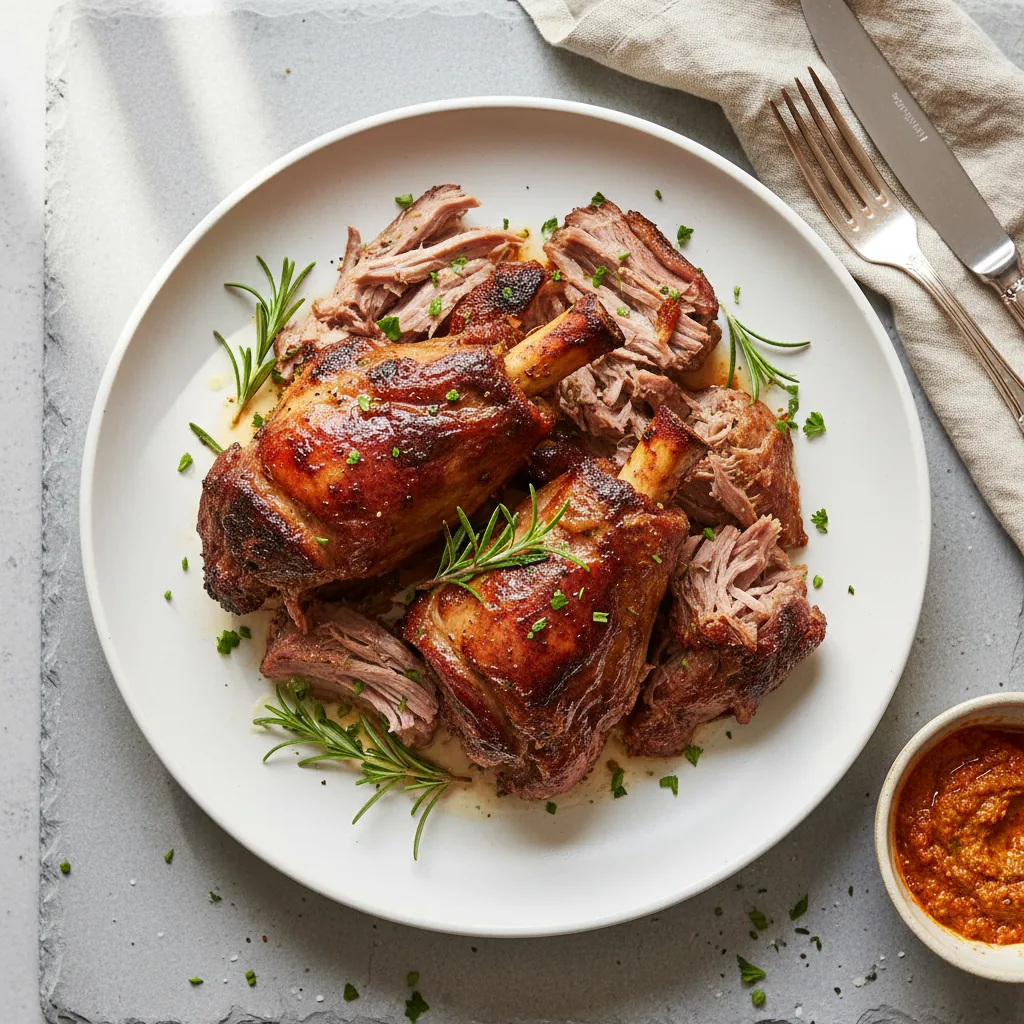
Tangia Marrakchia is one of the most famous traditional dishes from Marrakech, Morocco. This delicious slow-cooked meal is made with tender beef or lamb, garlic, preserved lemon, cumin, saffron, and Moroccan spices. The ingredients are cooked slowly until the meat becomes incredibly tender and absorbs the rich, aromatic flavors of the sauce.
Unlike a traditional Moroccan tagine, Tangia Marrakchia is traditionally prepared in a tall, narrow clay vessel called a tangia. The pot is sealed and placed in the residual heat of a communal wood-fired oven, where the meat cooks slowly for several hours.
Tangia is especially associated with Marrakech, where it has long been enjoyed by families, friends, and workers sharing a hearty meal. Today, you can recreate this beloved Moroccan specialty at home using a covered oven-safe pot or a slow cooker.
The beauty of Tangia Marrakchia lies in its simplicity. A handful of flavorful ingredients and patient cooking produce tender meat and a rich sauce without complicated preparation.
Whether you are exploring Moroccan cuisine or looking for a special dish to share with family, this traditional Tangia Marrakchia recipe brings the flavors of Marrakech straight to your table.
What Is Tangia Marrakchia?
Tangia Marrakchia is a traditional Moroccan meat dish closely associated with Marrakech. It takes its name from the clay vessel in which it is traditionally cooked.
The classic preparation uses chunks of beef or lamb seasoned with garlic, cumin, preserved lemon, saffron, olive oil, and other ingredients according to family tradition. The mixture is placed in the tangia vessel, sealed, and cooked slowly until the meat becomes soft and flavorful.
The long cooking process allows the meat to absorb the spices while releasing its own juices. As a result, the finished dish is rich, tender, and full of flavor.
Tangia is sometimes confused with Moroccan tagine, but the two dishes have different traditional cooking methods. A tagine is generally prepared in a shallow cooking vessel with a conical lid, while Tangia Marrakchia is traditionally cooked in a tall clay pot using slow, indirect heat.
Today, Tangia remains a cherished part of Marrakech’s food culture and is enjoyed at family meals, gatherings, and special occasions.
Why You’ll Love This Moroccan Tangia Recipe
- 🇲🇦 A traditional specialty associated with Marrakech
- 🥩 Tender, slow-cooked beef or lamb
- 🍋 Fragrant preserved lemon and garlic
- 🌿 Rich Moroccan flavors from cumin and saffron
- 🍲 Made with simple ingredients
- 🔥 Adapted for a home oven
- 👨🍳 Requires little hands-on preparation
- 🍞 Delicious with warm Moroccan bread
- 🎉 Perfect for family meals and special gatherings

Ingredients
For the Tangia
1 kg beef chuck, beef shank, or lamb shoulder, cut into large chunks
5–6 garlic cloves, peeled and lightly crushed
1 small preserved lemon, pulp removed and peel chopped
1 teaspoon ground cumin
1 teaspoon ground ginger
½ teaspoon ground black pepper
½ teaspoon ground turmeric, optional
A small pinch of saffron threads, optional
½ teaspoon salt, or to taste
3 tablespoons olive oil
1 tablespoon butter or smen (traditional Moroccan fermented butter), optional
150–200 ml water
1 tablespoon chopped fresh coriander, optional, for serving
For Serving
Warm Moroccan bread
Extra ground cumin, optional
Fresh coriander, optional
Moroccan mint tea
Ingredient note: Preserved lemon provides the distinctive tangy flavor associated with many versions of Tangia Marrakchia. If you do not have any, you can use a little fresh lemon zest and a small squeeze of lemon juice, although the flavor will be different.
Traditional recipes vary. Some use more butter or smen, while others keep the seasoning simple to highlight the taste of the meat.

Instructions
How to Make Tangia Marrakchia
Prepare the Meat
First, cut the beef or lamb into large, evenly sized chunks.
Choose a cut suitable for slow cooking, such as beef chuck, beef shank, or lamb shoulder. These cuts contain connective tissue that gradually softens during long cooking, producing tender meat.
Pat the meat dry with paper towels.
Place the chunks in a large bowl or directly into your cooking vessel.
Add the Garlic and Spices
Add the crushed garlic, chopped preserved lemon peel, cumin, ginger, black pepper, turmeric if using, and saffron.
Add the salt, olive oil, and optional butter or smen.
Mix everything together so the meat is coated with the seasonings.
The preserved lemon and garlic provide a savory, aromatic base, while cumin gives the dish its characteristic Moroccan flavor.
For a deeper flavor, you can cover the seasoned meat and refrigerate it for a few hours before cooking. However, marinating is optional because the long cooking process allows the flavors to develop.
Transfer to a Cooking Vessel
Traditionally, the ingredients are placed in a tall clay tangia pot.
At home, you can use a covered oven-safe casserole, Dutch oven, or another heavy pot with a well-fitting lid.
Arrange the meat and seasonings inside the vessel.
Pour in the water and gently mix. The liquid should help create steam and prevent the ingredients from drying out during the initial cooking stage.
Avoid adding too much water. Tangia is not intended to be a watery stew; the meat should cook slowly in a concentrated, flavorful liquid.
Cook the Tangia Slowly
Preheat your oven to 150°C (300°F).
Cover the cooking vessel tightly with its lid. If the lid does not seal well, you can cover the pot with foil before placing the lid on top.
Place the pot in the oven and cook for approximately 3–4 hours.
Cooking time depends on the cut of meat, the size of the pieces, and your oven. Check the meat after about three hours. It should be very tender and easy to separate with a fork.
If the meat is still firm, cover the pot again and continue cooking until it softens.
During cooking, avoid opening the pot too often because this releases heat and steam.
Check the Sauce and Tenderness
When the meat is tender, carefully remove the pot from the oven.
Watch out for hot steam when lifting the lid.
Check the sauce. It should be rich and flavorful, with the meat coated in the cooking juices.
If there is more liquid than you would like, transfer the pot to the stovetop if it is suitable for that use, or return it to the oven uncovered for a short time to reduce the sauce. Do not allow the meat to dry out.
Taste the sauce and adjust the seasoning if necessary. Preserved lemon can be salty, so add extra salt only after tasting.
Serve the Tangia Marrakchia
Transfer the meat and sauce to a serving dish, or serve directly from the cooking vessel if appropriate.
Spoon the rich cooking juices over the meat.
Garnish with a little fresh coriander if desired, and serve hot with warm Moroccan bread.
The bread is perfect for soaking up the fragrant sauce and enjoying every bit of the tender meat.
The Secret to Perfect Tangia Marrakchia
The most important secret is to cook the meat slowly.
High heat can make the meat tough before the connective tissue has time to soften. Gentle cooking gives the meat time to become tender while the garlic, cumin, and preserved lemon infuse the sauce.
The second secret is to choose the right cut. Beef chuck, beef shank, and lamb shoulder are good choices because they are well suited to long cooking.
Finally, keep the pot covered and avoid adding too much liquid. Tangia should have tender meat and concentrated cooking juices rather than a thin, watery sauce.
However, every cut of meat cooks differently, so use tenderness rather than the clock alone to determine when the dish is ready.


How to Serve Tangia Marrakchia
Tangia Marrakchia is usually served hot as a hearty main dish.
Place the meat in a large serving dish and spoon the cooking juices over it. Serve with Moroccan bread, which is traditionally used to pick up the meat and soak up the sauce.
You can also offer a simple tomato and cucumber salad, olives, or other fresh accompaniments.
Tangia is ideal for:
- Family lunches and dinners
- Moroccan-themed meals
- Weekend gatherings
- Celebrations and special occasions
- Sharing a traditional Marrakech-inspired meal
- A comforting meal during cooler weather
For a Moroccan-style meal, serve the Tangia with warm bread and finish with a glass of Moroccan mint tea.
Tips for Making the Best Tangia Marrakchia
Choose Meat for Slow Cooking
Beef chuck, beef shank, and lamb shoulder work well because they become tender during long, gentle cooking.
Lean cuts may dry out more easily, so choose meat with some connective tissue and a little fat.
Use Preserved Lemon Carefully
Preserved lemon gives Tangia its distinctive tangy, savory character.
Because it can be salty, remove the pulp if it is very salty and adjust the amount according to your taste.
Don’t Add Too Much Water
A small amount of liquid helps create steam and protects the meat during cooking.
Too much water can dilute the flavor. Start with the recommended amount and check the pot if necessary during cooking.
Keep the Pot Covered
A tightly covered vessel helps retain moisture and heat.
This is particularly important when adapting Tangia for a home oven rather than a traditional communal oven.
Allow Enough Cooking Time
The meat should become fork-tender before serving.
If it is still tough, continue cooking in 20–30-minute increments and check again.
Taste Before Adding More Salt
Preserved lemon and smen can both contribute saltiness.
Taste the finished sauce before making any final seasoning adjustments.
Rest Briefly Before Serving
Let the Tangia stand for about 10 minutes after cooking. This makes it easier to handle and allows the cooking juices to settle.
Can I Make Tangia Marrakchia with Beef or Lamb?
Yes. Both beef and lamb can be used.
Beef chuck and beef shank are convenient choices for a home version. Lamb shoulder is another excellent option and gives the dish a richer flavor.
Cooking time may vary according to the cut and size of the pieces, so check for tenderness rather than relying only on a fixed time.
Can I Make Tangia Without a Traditional Clay Pot?
Yes. A traditional tangia pot is part of the dish’s heritage, but you can make a home version in a covered Dutch oven or another heavy, oven-safe casserole.
Choose a vessel with a lid that fits securely. If needed, cover it with foil to help retain moisture.
The result will not reproduce every detail of cooking in a traditional communal oven, but it can still produce delicious, tender meat with Moroccan flavors.
Can I Make Tangia Marrakchia in a Slow Cooker?
Yes. A slow cooker is a convenient modern alternative.
Place the seasoned meat and ingredients in the slow cooker. Use less water than you would for a conventional stew, because slow cookers retain moisture well.
Cook on low until the meat is tender, usually around 6–8 hours depending on the appliance and cut of meat. Check the manufacturer’s guidance and the meat’s tenderness as cooking times can vary.
If the sauce is too thin at the end, transfer it to a saucepan and simmer gently until it reduces to your preferred consistency.
Can I Prepare Tangia Marrakchia Ahead of Time?
Yes. You can prepare the ingredients and season the meat in advance.
Keep the uncooked meat covered in the refrigerator and cook it within a safe storage period. You can also cook the Tangia ahead of time, cool it promptly, and refrigerate it in a covered container.
For food safety, refrigerate cooked meat within two hours of cooking and use it within three to four days. Reheat thoroughly until steaming hot before serving.
The flavors may become even more developed after resting overnight in the refrigerator.
Moroccan Tangia Variations
Traditional-Style Tangia
This version focuses on meat, garlic, cumin, preserved lemon, olive oil, and a small amount of water. It keeps the seasoning simple and lets the meat shine.
Tangia with Smen
Add a small amount of smen, a traditional Moroccan fermented butter, for a deeper and more distinctive flavor.
Because smen can be strong and salty, begin with a small quantity.
Tangia with Saffron
A pinch of saffron adds a delicate aroma and a subtle golden color.
Saffron is optional, and the dish can still be delicious without it.
Lamb Tangia
Use lamb shoulder instead of beef for a richer, more pronounced flavor.
Keep the cooking temperature low and allow enough time for the lamb to become tender.
Tangia with Extra Cumin
If you enjoy the flavor of cumin, add a little more to the seasoning and offer extra cumin at the table.
This variation emphasizes one of the spices most closely associated with Moroccan Tangia.
Frequently Asked Questions
What is Tangia Marrakchia?
Tangia Marrakchia is a traditional slow-cooked meat dish associated with Marrakech, Morocco. It is made with beef or lamb, garlic, preserved lemon, spices, and oil, then cooked slowly until the meat becomes very tender.
Why is it called Tangia?
The dish takes its name from the traditional clay vessel used to cook it. The vessel is tall and narrow, and the ingredients are sealed inside while they cook slowly.
Is Tangia the same as Moroccan tagine?
No. Although the names are similar, Tangia and tagine refer to different traditional preparations.
Tangia Marrakchia is associated with a tall clay vessel and slow cooking, traditionally in the residual heat of a communal oven. A tagine is generally cooked in a shallow vessel with a conical lid.
What meat is best for Tangia?
Beef chuck, beef shank, and lamb shoulder are all suitable choices. These cuts are well suited to slow cooking and become tender as their connective tissue softens.
What gives Tangia its distinctive flavor?
Garlic, cumin, preserved lemon, olive oil, and slow cooking contribute to its characteristic flavor. Some versions also use saffron, smen, or other seasonings.
Why is my Tangia meat still tough?
The meat may need more cooking time. Slow-cooked cuts often remain firm until their connective tissue has softened sufficiently.
Cover the pot again and continue cooking gently until the meat is easy to separate with a fork.
Can I make Tangia without preserved lemon?
Yes, although the flavor will be different. A little fresh lemon zest and a small amount of lemon juice can provide acidity, but they will not fully reproduce the deep, salty, fermented flavor of preserved lemon.
Is Tangia Marrakchia spicy?
Tangia is generally aromatic rather than hot. Cumin, garlic, and other seasonings provide flavor without necessarily making the dish chili-hot.
What should I serve with Tangia Marrakchia?
Warm Moroccan bread is a classic accompaniment. You can also serve a fresh salad, olives, or simple vegetables alongside the meat.
Can I freeze Tangia Marrakchia?
Yes. Allow the cooked meat to cool, divide it into portions, and place it in airtight freezer-safe containers with some of the sauce.
For best quality, use within two to three months. Thaw in the refrigerator and reheat thoroughly before serving.
Nutrition Information
Approximate nutrition per serving:
- Calories: 400–550 kcal
- Protein: 35–45 g
- Carbohydrates: 2–8 g
- Fat: 25–40 g
- Saturated Fat: 8–15 g
- Fiber: 0–1 g
- Sugar: 1–3 g
- Sodium: 500–900 mg
These estimates are for the meat and sauce without bread or side dishes. Actual nutrition will vary depending on the meat cut, portion size, amount of fat, and use of butter or smen. Preserved lemon can also affect the sodium content.
More Moroccan Recipes to Try
If you enjoyed this Tangia Marrakchia recipe, you can explore more traditional Moroccan dishes:
Moroccan Chicken Tagine
A comforting dish of chicken, vegetables, and fragrant Moroccan spices cooked slowly until tender.
Moroccan Beef Tagine with Prunes
A sweet-savory Moroccan classic combining tender beef, prunes, and warm spices.
Moroccan Kefta Tagine with Eggs
Seasoned meatballs simmered in a rich tomato sauce and finished with eggs.
Moroccan Couscous
A beloved Moroccan meal featuring steamed couscous served with vegetables and meat.
Moroccan Msemen
Flaky, layered Moroccan flatbread that pairs well with both sweet and savory dishes.
Moroccan Mint Tea
The classic Moroccan drink to enjoy after a hearty meal.
Final Thoughts
Tangia Marrakchia is a wonderful expression of Marrakech’s rich culinary traditions. With tender meat, fragrant garlic, cumin, and preserved lemon, this slow-cooked dish transforms simple ingredients into a deeply satisfying meal.
Although traditional Tangia is cooked in a special clay vessel using the heat of a communal oven, a covered pot in a home oven can help you recreate its comforting flavors in your own kitchen.
Whether you prepare it for a family gathering, a special weekend meal, or simply to explore the food of Marrakech, Tangia Marrakchia is a rewarding dish to share.
Overall, the keys to a delicious Tangia are a suitable cut of meat, simple seasonings, gentle heat, and enough time for the meat to become tender.
Serve it hot with Moroccan bread and enjoy a taste of Marrakech at home. 🇲🇦🍲


Leave a Reply