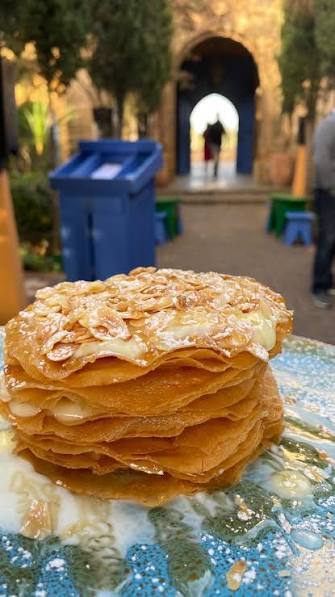
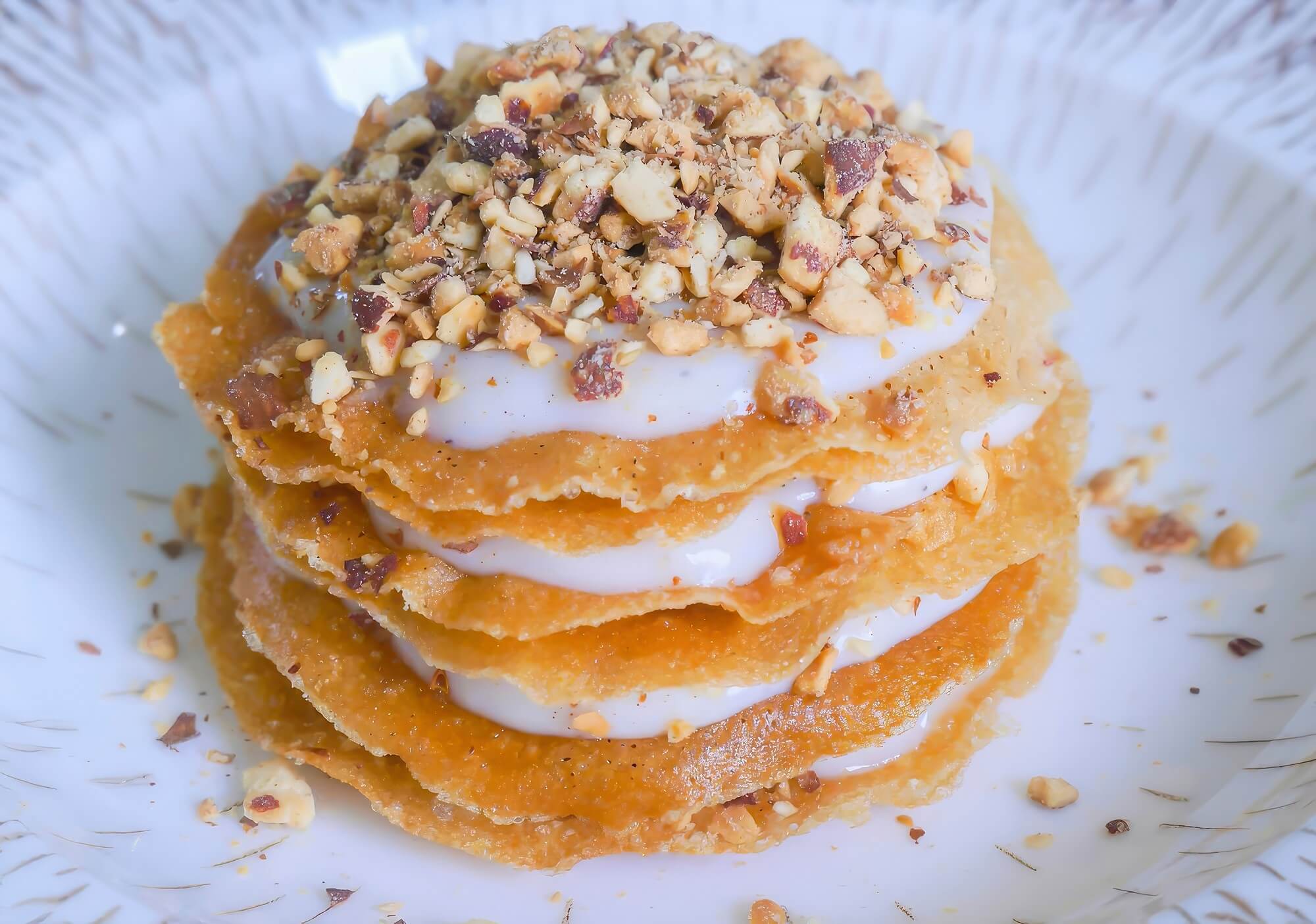
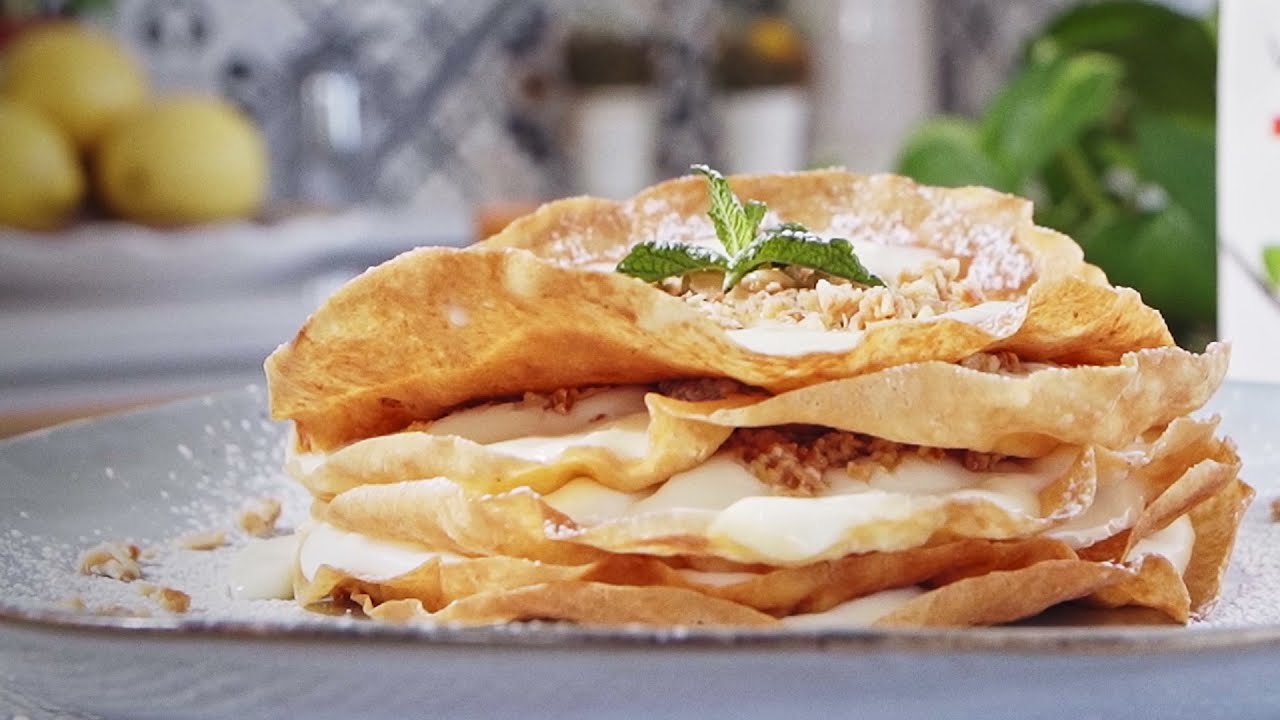
Jawhara is one of Morocco’s most elegant traditional desserts. Also known as Milk Pastilla, Pastilla au Lait, Ktefa, or Jawhara, this delicate dessert combines crisp golden pastry sheets with silky milk cream, toasted almonds, cinnamon, and fragrant orange blossom water.
The name Jawhara (جوهرة) means “jewel” in Arabic, and the dessert certainly lives up to its name. In particular, the contrast between the crispy pastry and creamy filling makes every bite special.
Traditionally associated with Fez and Fassi cuisine, Jawhara is often prepared for celebrations, family gatherings, and special occasions.
What Is Moroccan Jawhara?
Moroccan Jawhara is a layered dessert made from thin warqa or pastilla pastry sheets, milk custard, and toasted almonds.
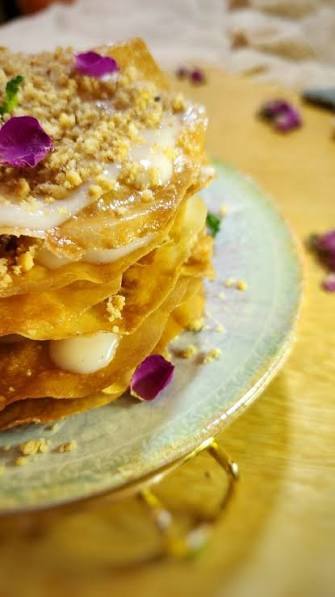
First, the pastry sheets are fried until crisp and golden. Next, a creamy milk mixture flavored with orange blossom water is prepared. The crispy sheets are then layered with the cream and almonds.
Finally, the dessert is decorated with powdered sugar and cinnamon.
The result is a dessert that is crunchy, creamy, lightly sweet, nutty, and beautifully fragrant.
Unlike savory Moroccan pastilla, Jawhara is specifically prepared as a sweet dessert. It is particularly associated with the culinary traditions of Fez.
Why You’ll Love This Moroccan Jawhara Recipe
- 🇲🇦 A traditional Moroccan dessert
- 💎 Known as the “jewel” of Moroccan desserts
- 🥛 Made with a silky milk cream
- 🌸 Fragrant with orange blossom water
- 🌰 Filled with toasted almonds
- ✨ Crispy and creamy at the same time
- 🍵 Perfect with Moroccan mint tea
- 🎉 Beautiful enough for celebrations
- 👨🍳 Made with simple ingredients

Ingredients
For the Pastry
10 medium warqa or pastilla sheets
Vegetable oil, for frying
You can also use filo pastry if traditional warqa is unavailable. However, warqa gives Jawhara its characteristic Moroccan texture.
For the Milk Cream
500 ml whole milk
30 g cornstarch
80 g granulated sugar
2 tablespoons orange blossom water
1 small cinnamon stick, optional
A small pinch of mastic gum, optional
For the Almond Filling
100 g roasted almonds
1 tablespoon powdered sugar
½ teaspoon ground cinnamon
For Decoration
Powdered sugar
Ground cinnamon
A few toasted almond pieces

Instructions
How to Make Moroccan Jawhara
Prepare the Almonds
First, roast the almonds if they are not already toasted.
Place them in a dry frying pan over medium-low heat and toast them gently until they become golden and fragrant.
Be careful not to burn them because almonds can darken quickly.
Afterward, allow them to cool completely.
Then, roughly crush the almonds. Do not grind them into a fine powder because small pieces give Jawhara a much better texture.
Mix the crushed almonds with the powdered sugar and cinnamon.
Set the mixture aside until you are ready to assemble the dessert.
Prepare the Milk Cream
First, pour about 100 ml of the cold milk into a small bowl.
Add the cornstarch and whisk until completely smooth.
Meanwhile, pour the remaining milk into a saucepan.
Add the sugar and, if using it, the cinnamon stick.
Place the saucepan over medium-low heat.
Next, slowly add the cornstarch mixture while whisking continuously.
Continue stirring until the milk begins to thicken.
This step is important because constant stirring prevents lumps from forming and keeps the cream smooth.
Once the mixture becomes thick and creamy, remove it from the heat.
Then, remove the cinnamon stick and stir in the orange blossom water.
If you are using mastic gum, add a very small amount at this stage.
Finally, transfer the cream to a bowl and allow it to cool.
For the best result
, refrigerate the cream until it is completely chilled and thick.
Prepare the Pastry Sheets
Next, prepare the warqa sheets.
If your sheets are very large, cut them into circles or shapes that fit your serving plate.
Heat vegetable oil in a wide frying pan.
Once the oil is hot, carefully fry the pastry sheets one at a time.
Fry them only until they become light golden and crispy.
Because the sheets are very thin, they can burn quickly. Therefore, keep a close eye on them while frying.
Remove each sheet and place it on paper towels to absorb excess oil.
Allow the pastry to cool completely before assembling the dessert.
Oven Alternative
If you prefer not to fry the pastry, you can lightly brush the sheets with melted butter and bake them until crisp and golden.
This method is also used as a modern alternative to frying.
Assemble the Jawhara
Now comes the most enjoyable part.
Place one crispy pastry sheet on a large serving plate.
Next, spread a thin layer of chilled milk cream over the pastry.
Sprinkle some toasted crushed almonds over the cream.
Then, place another pastry sheet on top.
Repeat the process:
Pastry → Milk Cream → Almonds → Pastry
Continue until you have several beautiful layers.
For a medium-sized Jawhara, around five or more layers can be used, depending on how tall you want the dessert to be.
Finally, place a crispy pastry sheet on top.
Decorate the Jawhara
To finish, generously dust the top with powdered sugar.
Then, sprinkle a small amount of cinnamon over the powdered sugar.
You can also add a few toasted almond pieces for extra texture and decoration.
For a more elegant presentation, use a small sieve to create a delicate pattern with the powdered sugar and cinnamon.
The contrast between the white sugar, golden pastry, almonds, and cinnamon gives Jawhara its beautiful appearance.
The Secret to Perfect Jawhara
The most important secret is timing.
Ideally, assemble Jawhara shortly before serving.
If you assemble it too early, the milk cream can gradually soften the crispy pastry.
Therefore, keep the pastry and cream separate until you are almost ready to serve.
Then assemble the layers and bring the dessert directly to the table.
This allows you to enjoy the most important characteristic of Jawhara: the contrast between crisp pastry and creamy filling.

How to Serve Moroccan Jawhara
Moroccan Jawhara is traditionally served as an elegant dessert after a meal or during special occasions.
Cut it carefully into portions and serve it immediately after assembly.
Most importantly, pair it with a glass of Moroccan mint tea.
The refreshing mint tea balances the sweetness of the milk cream and powdered sugar beautifully.
Jawhara is also an excellent dessert for:
- Moroccan family gatherings
- Ramadan evenings
- Eid celebrations
- Weddings
- Dinner parties
- Special occasions
- Afternoon tea
Tips for Making the Best Jawhara
Keep the Pastry Crispy
The pastry is the heart of Jawhara.
Therefore, fry the sheets until they are crisp but not dark brown.
If they become too dark, they can develop a bitter flavor.
Don’t Make the Cream Too Thin
The milk cream should be thick enough to stay between the pastry layers.
A cream that is too runny can quickly make the pastry soggy.
Consequently, cook the cream until it coats the spoon and becomes noticeably thick.
Cool the Cream Completely
This is another important step.
Warm cream will soften the crispy pastry much faster.
For the best texture, allow the cream to cool and then refrigerate it before assembling the dessert.
Don’t Grind the Almonds Too Finely
Roughly crushed almonds provide a pleasant crunch.
In contrast, finely ground almonds can disappear into the cream.
Assemble Just Before Serving
Finally, assemble Jawhara as close to serving time as possible.
This keeps the pastry beautifully crisp.
Can I Use Filo Pastry Instead of Warqa?
Yes.
Traditional Moroccan Jawhara is made with thin warqa pastry. However, filo pastry is a convenient substitute if warqa is difficult to find.
If using filo, lightly brush the sheets with melted butter and bake them until golden and crisp.
You can then use the baked filo in exactly the same layering process.
Can I Make Jawhara Ahead of Time?
Yes, but it is better to prepare the components separately.
The milk cream can be prepared ahead and stored in the refrigerator.
The crispy pastry sheets can also be prepared in advance and kept in an airtight container at room temperature.
However, do not assemble the complete dessert too early.
Instead, keep everything separate and assemble the Jawhara shortly before serving so the pastry stays crisp.
Moroccan Jawhara Variations
Classic Almond Jawhara
The classic version combines crispy pastry, milk cream, toasted almonds, cinnamon, and powdered sugar.
This is the version most closely associated with traditional Moroccan Jawhara.
Orange Blossom Jawhara
For a stronger Moroccan aroma, increase the orange blossom water slightly.
However, use it carefully because too much can overpower the delicate milk cream.
Pistachio Jawhara
You can replace some of the almonds with chopped pistachios for a slightly different flavor and a beautiful green color.
Individual Jawhara
Instead of preparing one large dessert, make several small individual Jawharas.
This presentation works particularly well for dinner parties and celebrations.
Baked Jawhara
For a lighter preparation, bake buttered pastry sheets instead of frying them.
The texture remains crispy while reducing the amount of oil used during preparation.
Frequently Asked Questions
What does Jawhara mean?
Jawhara (جوهرة) means “jewel” in Arabic.
The name reflects the elegant appearance of this Moroccan dessert.
Is Jawhara the same as Milk Pastilla?
Yes. Jawhara is commonly known as Milk Pastilla, Pastilla au Lait, Ktefa, or Ktefa au Lait.
It is a sweet Moroccan dessert made with crispy pastry, milk cream, almonds, and aromatic ingredients.
Where does Moroccan Jawhara come from?
Jawhara is strongly associated with Fez and traditional Fassi cuisine.
It belongs to the refined sweet pastry tradition of Moroccan cuisine and is especially associated with celebrations and special meals.
What pastry is used for Jawhara?
Traditional Jawhara uses warqa, the very thin pastry also used for Moroccan pastilla.
However, filo pastry can be used as a substitute.
Can I make Jawhara without almonds?
Yes. Almonds are an important traditional ingredient, but you can experiment with other nuts such as pistachios or walnuts.
However, for a classic Moroccan Jawhara, toasted almonds are the best choice.
Why does my Jawhara become soggy?
Usually, the pastry becomes soggy because the dessert was assembled too early or the milk cream was too warm or too thin.
Therefore, chill the cream thoroughly and assemble the dessert shortly before serving.
Can I freeze Jawhara?
It is not recommended to freeze the fully assembled dessert because freezing and thawing can destroy the delicate texture of the crispy pastry.
Instead, prepare the individual components separately when possible.
Nutrition Information
Approximate nutrition per serving:
- Calories: 280–320 kcal
- Protein: 6 g
- Carbohydrates: 38 g
- Fat: 13 g
- Saturated Fat: 3 g
- Fiber: 2 g
- Sugar: 18 g
- Sodium: 50 mg
Nutrition information is an estimate and can vary depending on the pastry, amount of oil, milk, almonds, sugar, and serving size.
More Moroccan Recipes to Try
If you enjoyed this Moroccan Jawhara dessert, you can also try these traditional Moroccan recipes:
Moroccan Fekkas
A crunchy twice-baked Moroccan cookie packed with almonds and perfect with mint tea.
Moroccan Chebakia
A beautifully shaped sesame pastry coated in honey and traditionally enjoyed during Ramadan.
Beghrir with Amlou
Soft Moroccan thousand-hole pancakes served with delicious Moroccan almond spread.
Moroccan Mint Tea
The perfect drink to serve alongside Jawhara and other Moroccan pastries.
Sellou
A rich Moroccan roasted flour and almond mixture traditionally prepared for celebrations and Ramadan.
Final Thoughts
Moroccan Jawhara is a perfect example of how simple ingredients can create something incredibly elegant.
The combination of crisp pastry, silky milk cream, toasted almonds, cinnamon, and orange blossom water creates a dessert full of contrasting textures and classic Moroccan flavors.
Furthermore, its beautiful layered appearance makes it feel much more sophisticated than the simple ingredients might suggest.
Whether you prepare it for a family gathering, Ramadan, Eid, a wedding, or simply because you want to try something new, Jawhara brings a true taste of Moroccan pastry tradition to the table.
Finally, serve it with a freshly prepared glass of Moroccan mint tea, and enjoy this beautiful “jewel” of Moroccan desserts. 🇲🇦💎🍵
More Moroccan Recipes to Try
- Moroccan Mint Tea — the perfect drink to serve alongside Jawhara.
- Moroccan Fekkas — another traditional Moroccan treat that pairs beautifully with tea.
- Beghrir with Amlou — soft Moroccan pancakes served with almond-based Amlou.
Leave a Reply