Authentic Moroccan Harcha Recipe
Harcha is a traditional Moroccan semolina flatbread with a crisp, golden exterior and a soft, tender center. Made with fine semolina, butter, milk, and a little sugar, this simple Moroccan recipe is especially popular at breakfast and tea time.
Unlike regular bread, Harcha has a slightly crumbly texture and a rich buttery flavor. It is traditionally cooked in a pan until both sides become beautifully golden, making it one of the easiest Moroccan breads to prepare at home.
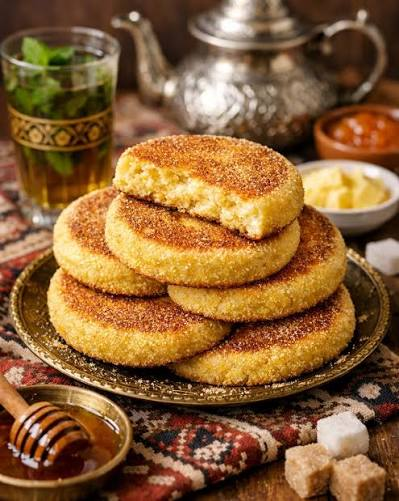
In Morocco, Harcha is often served warm with honey, butter, jam, cheese, or Moroccan mint tea. Some families enjoy it sweet, while others prefer a more savory version.
Whether you’re looking for a traditional Moroccan breakfast or a simple homemade bread to enjoy with tea, this authentic Harcha recipe is easy to make and requires only a handful of ingredients.
Why You’ll Love This Moroccan Harcha
- Authentic Moroccan breakfast recipe
- Crispy and golden on the outside
- Soft and tender inside
- Made with simple pantry ingredients
- Ready in about 30 minutes
- Delicious with honey, butter, jam, or cheese
- Perfect with Moroccan mint tea
- No oven required
What Is Harcha?
Harcha, also spelled Harsha, is a Moroccan flatbread made primarily from semolina. The dough is shaped into a thick round disc and cooked in a pan over medium-low heat.
The word Harcha is associated with the coarse, slightly crumbly texture created by semolina. Unlike Msemen, which is made from a stretchy dough and folded into layers, Harcha has a much simpler preparation and a distinctive buttery, crumbly texture.
It is especially popular during Moroccan breakfasts, afternoon tea, Ramadan, and family gatherings.

Ingredients
For the Harcha
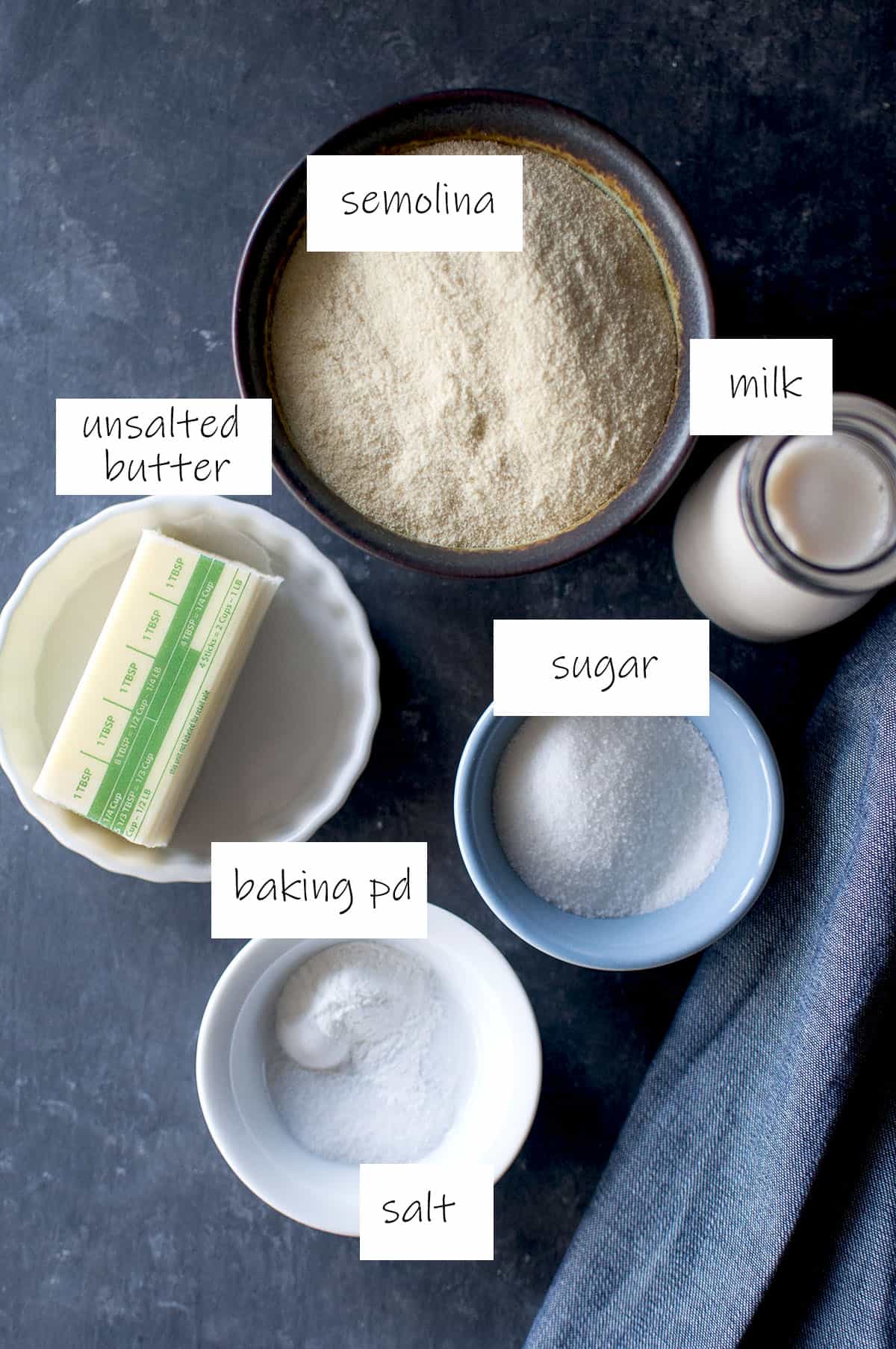
2 cups fine semolina½ cup milk
½ cup melted butter
2 tablespoons vegetable oil
2 tablespoons sugar
1 teaspoon baking powder
½ teaspoon salt
For Shaping
Extra semolina for dusting
A little butter or oil for the pan
To Serve
Honey
Butter
Jam
Soft cheese
Moroccan mint tea

Instructions
Mix the Dry Ingredients
Add the semolina, sugar, baking powder, and salt to a large bowl.
Mix everything together until evenly combined.
Add the Butter
Pour the melted butter and vegetable oil over the semolina.
Using your fingertips, gently rub the mixture together until the semolina is coated with the butter and oil.
This step is important because it gives Harcha its characteristic crumbly texture.
Add the Milk
Gradually add the milk while gently mixing.
Do not knead the mixture like traditional bread dough. Instead, mix just until the ingredients come together and form a soft dough.
Let the mixture rest for 5–10 minutes so the semolina can absorb the liquid.
Shape the Harcha
Sprinkle some semolina onto your work surface.
Place the dough on top and gently shape it into a round disc about 1–2 cm thick.
You can make one large Harcha or divide the dough into several smaller portions for individual servings.
Dust the surface lightly with additional semolina.
Cook the Harcha
Heat a heavy frying pan or skillet over medium-low heat.
Lightly grease the pan and carefully place the Harcha inside.
Cook slowly for approximately 5–7 minutes per side, turning it carefully once the bottom becomes golden.
The relatively low heat is important because it allows the inside to cook without burning the outside.
Continue cooking until both sides are golden brown and the center is fully cooked.
Serve Warm
Transfer the Harcha to a plate and allow it to cool for a couple of minutes.
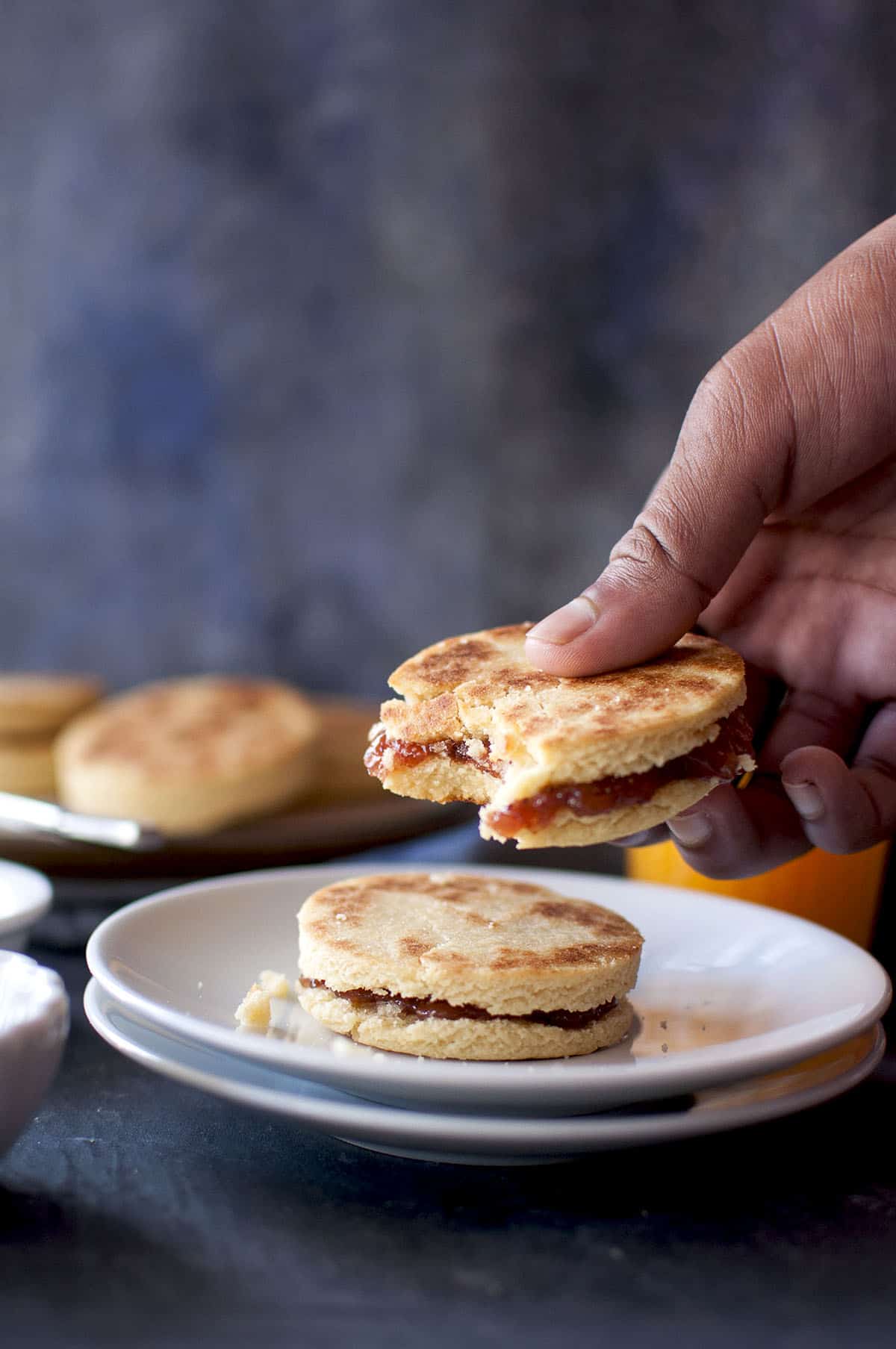
Cut it into wedges and serve warm with honey, butter, jam, cheese, or Moroccan mint tea.

Tips for the Best Harcha
Use fine semolina
Fine semolina creates a more delicate and tender Harcha. If you use very coarse semolina, the final texture will be noticeably grainier.
Don’t knead the dough
Harcha isn’t supposed to have the stretchy texture of regular bread. Handle the mixture gently and avoid excessive kneading.
Let the dough rest
A short resting period allows the semolina to absorb the milk and helps create a better texture.
Cook slowly
Keep the heat around medium-low. Cooking too quickly can make the outside brown before the inside is properly cooked.
Don’t make it too thin
A slightly thick Harcha gives you the ideal contrast between a golden exterior and a soft center.
Serve it warm
Harcha is at its best when freshly cooked and warm, especially when served with butter and honey.
What to Serve With Harcha
Harcha is incredibly versatile and can be served with both sweet and savory accompaniments.
Try it with:
- Moroccan mint tea
- Honey and butter
- Olive oil
- Strawberry or apricot jam
- Soft cheese
- Amlou
- Fresh fruit
- Moroccan breakfast spreads
For a traditional Moroccan breakfast, serve warm Harcha alongside mint tea, honey, butter, and cheese.
Sweet or Savory Harcha?
Traditional Harcha can be prepared with different levels of sweetness depending on the family recipe.
For a sweeter version, increase the sugar slightly and serve it with honey, jam, or fruit.
For a savory version, reduce or omit the sugar and serve it with cheese, olive oil, or savory spreads.
The basic semolina dough remains simple and versatile.
Nutrition Information
Approximate nutrition per serving
| Nutrient | Amount |
|---|---|
| Calories | 290 kcal |
| Protein | 6 g |
| Carbohydrates | 36 g |
| Fat | 14 g |
| Fiber | 2 g |
| Sugar | 5 g |
| Sodium | 250 mg |
Nutrition values are approximate and can vary depending on the size of the Harcha and the amount of butter, oil, and milk used.
Frequently Asked Questions
What is Harcha made of?
Harcha is traditionally made with semolina, butter, milk, oil, salt, and sometimes sugar and baking powder. The ingredients are combined into a soft mixture, shaped into a round flatbread, and cooked in a pan.
Is Harcha the same as Msemen?
No. Although both are popular Moroccan breads, they are very different. Harcha is made primarily from semolina and has a crumbly, tender texture, while Msemen is made from a stretchy dough that is folded into thin layers.
Can I make Harcha without milk?
Yes. You can replace the milk with water, although milk gives Harcha a richer flavor and softer texture.
Why is my Harcha falling apart?
Harcha can become fragile if there isn’t enough moisture to bind the semolina. Allowing the mixture to rest after adding the milk can also help the semolina absorb the liquid and hold together better.
Why is my Harcha hard?
Cooking it over heat that is too high can cause the outside to become hard or burnt before the inside cooks properly. Use medium-low heat and allow it to cook slowly.
Can I make Harcha ahead of time?
Yes. Harcha can be prepared ahead and gently reheated in a pan before serving. However, it is best when freshly cooked.
Is Harcha eaten for breakfast?
Yes. Harcha is a popular Moroccan breakfast and tea-time food. It is commonly served warm with butter, honey, cheese, jam, or Moroccan mint tea.
Most Asked Question: How Do You Eat Harcha?
The traditional way to enjoy Harcha is warm and freshly cooked, usually broken or cut into wedges and served with Moroccan tea.
For a classic Moroccan combination, spread some butter over a warm piece of Harcha and drizzle it with honey. You can also serve it with cheese, jam, or Amlou for a delicious Moroccan breakfast.
Final Thoughts
Moroccan Harcha is proof that a few simple ingredients can create something incredibly delicious. The combination of semolina, butter, and milk produces a golden flatbread with a satisfying texture and rich flavor.
Whether you enjoy it with honey and butter in the morning, alongside Moroccan mint tea in the afternoon, or as part of a traditional family breakfast, Harcha is a wonderful way to experience the simple side of Moroccan cuisine.
If you’re exploring Moroccan breads, Harcha is definitely one recipe worth making at home.
Leave a Reply