
Moroccan Beef Tagine with Prunes is a classic Moroccan dish that perfectly combines savory, sweet, and aromatic flavors. Tender beef is slowly cooked with onions and traditional Moroccan spices until it becomes incredibly soft. The dish is then finished with sweet prunes, toasted almonds, and sesame seeds for a beautiful contrast of textures and flavors.
This traditional tagine is especially popular during family gatherings, holidays, and special occasions. The slow cooking allows the beef to absorb the spices while creating a rich sauce that is perfect for soaking up with warm Moroccan bread.
Although the combination of beef and prunes may sound unusual at first, the sweet prunes complement the deeply seasoned meat beautifully. The result is a comforting and elegant Moroccan meal that is surprisingly easy to prepare at home.
Why You’ll Love This Recipe
- Authentic Moroccan comfort food
- Tender, slow-cooked beef
- Delicious sweet and savory combination
- Fragrant Moroccan spices
- Perfect for family dinners and celebrations
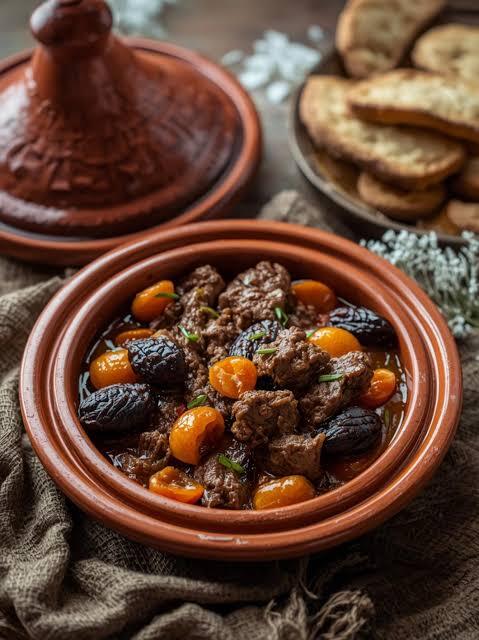
- Beautiful served in a traditional Moroccan tagine

Ingredients
For the Beef Tagine
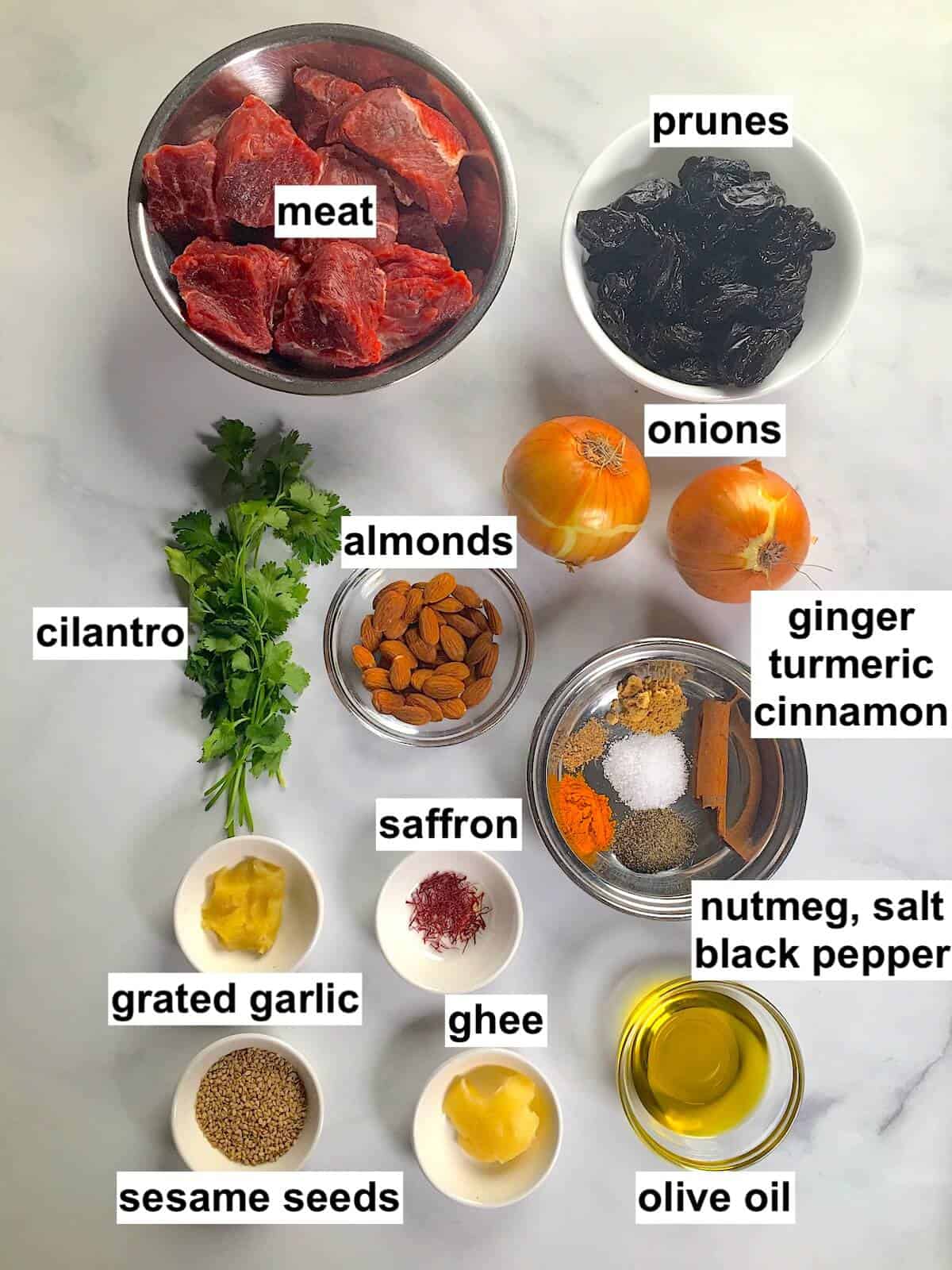
2 lb (900 g) beef chuck or beef stew meat, cut into large pieces
2 large onions, finely chopped
3 garlic cloves, minced
3 tablespoons olive oil
1 teaspoon ground ginger
1 teaspoon turmeric
1 teaspoon ground cumin
½ teaspoon black pepper
½ teaspoon cinnamon
1 teaspoon salt, or to taste
½ teaspoon saffron threads, optional
2 tablespoons chopped fresh cilantro
2 tablespoons chopped fresh parsley
1½ to 2 cups water
For the Prunes
1½ cups pitted prunes
1 tablespoon butter
1 tablespoon honey
½ teaspoon cinnamon
½ cup water
For Garnishing
½ cup blanched almonds
1 tablespoon sesame seeds
Fresh cilantro, optional

Instructions
Season the Beef
Place the beef in a large bowl and season it with ginger, turmeric, cumin, black pepper, cinnamon, and salt.
Add the garlic, parsley, cilantro, and olive oil. Mix well so the spices coat the meat evenly.
For an even deeper flavor, allow the beef to marinate for 30 minutes before cooking.
Start the Tagine
Place a traditional Moroccan tagine over low to medium heat and add the chopped onions.
Add the seasoned beef and any remaining marinade.
Cook for several minutes, turning the beef occasionally, until the onions begin to soften and the meat starts to brown lightly.
Slow Cook the Beef
Add enough water to partially cover the meat.
Cover the tagine and reduce the heat to low. Allow the beef to cook slowly for approximately 1½ to 2 hours, depending on the size and cut of the meat.
Check occasionally and add a little more water if necessary.
The beef is ready when it becomes tender enough to easily pull apart with a fork.
Prepare the Sweet Prunes
While the beef cooks, place the prunes in a small saucepan with water, butter, honey, and cinnamon.
Simmer gently for approximately 10–15 minutes, until the prunes become soft and glossy and the liquid turns into a lightly sweet syrup.
Don’t let the prunes become mushy.
Toast the Almonds
Heat a small pan over medium heat and toast the blanched almonds until golden brown.
Keep them moving so they don’t burn.
Set them aside for serving.
Finish the Tagine
Once the beef is tender, allow the sauce to reduce until it becomes rich and concentrated.
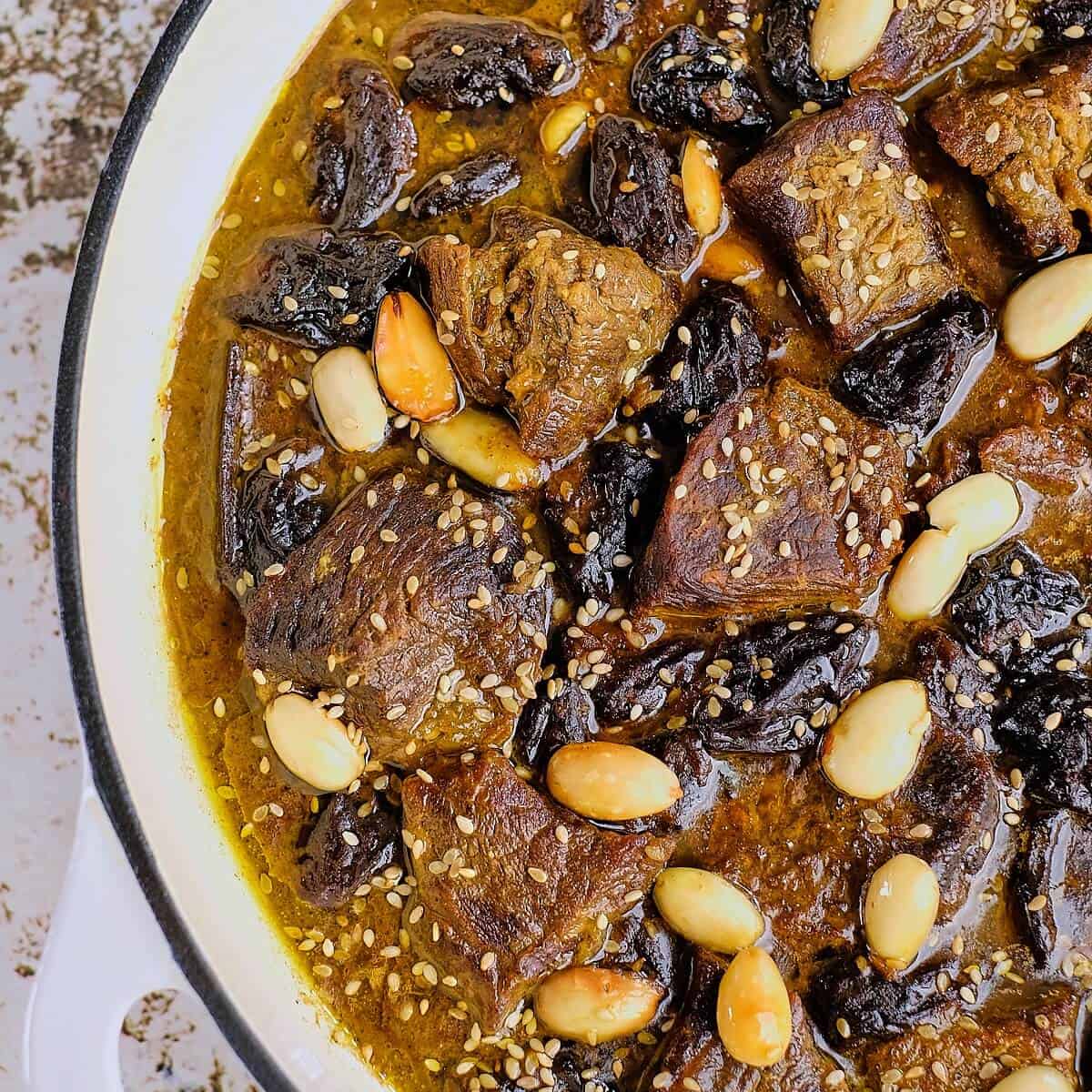
Arrange the sweet prunes over the beef.
Drizzle some of the prune syrup over the top, then garnish with toasted almonds and sesame seeds.
Finish with a little fresh cilantro.

Tips for the Best Moroccan Beef Tagine
Choose the right beef
Beef chuck is an excellent choice because the connective tissue breaks down during slow cooking, resulting in tender, flavorful meat.
Cook it slowly
Don’t rush the cooking process. A low temperature gives the beef time to become tender while allowing the spices to develop.
Don’t make the sauce too watery
The finished sauce should be rich and concentrated rather than resembling a soup. If there’s too much liquid near the end, leave the tagine uncovered for a few minutes so it can reduce.
Balance the sweetness
Prunes are naturally sweet, so you don’t need a lot of honey. Start with a small amount and adjust according to your preference.
Toast the almonds
Golden toasted almonds add an incredible crunchy texture against the tender beef and soft prunes.
What to Serve with Beef Tagine with Prunes
The traditional way to enjoy this dish is with warm Moroccan Khobz. Tear off a piece of bread and use it to scoop up the tender beef, prunes, and rich sauce.
You can also serve the tagine alongside a Moroccan salad such as:
Finish the meal with a glass of Moroccan Mint Tea for a complete Moroccan dining experience.
Can I Make This Without a Tagine?
Absolutely.
If you don’t own a traditional clay tagine, you can prepare Moroccan Beef Tagine with Prunes in a heavy-bottomed Dutch oven or a large covered skillet.
The most important part is maintaining a gentle simmer and giving the beef enough time to become tender.
A tagine is wonderful for presentation and traditional cooking, but you can still achieve excellent results with a regular heavy pot.
Can I Use Lamb Instead of Beef?
Yes. Lamb is actually another popular choice for Moroccan tagines with prunes.
Lamb shoulder works particularly well because it becomes tender during slow cooking and has enough fat to develop a rich sauce.
If you use lamb, follow the same basic method and begin checking for tenderness after about 1½ hours.
Can I Make Moroccan Beef Tagine Ahead of Time?
Yes, and the flavor can become even better after resting.
Prepare the beef and sauce ahead of time and refrigerate them in an airtight container. Prepare the prunes separately and add them when reheating.
Warm everything gently before serving and add the toasted almonds and sesame seeds at the end.
Frequently Asked Questions
Is Moroccan Beef Tagine with Prunes sweet?
It has a sweet and savory flavor profile, but it shouldn’t taste like a dessert. The naturally sweet prunes balance the savory, spiced beef and onions.
What spices are used in Moroccan Beef Tagine?
Common spices include ginger, turmeric, cumin, cinnamon, black pepper, and saffron. Fresh cilantro and parsley add another layer of flavor.
What type of beef is best for tagine?
Beef chuck, shoulder, or other slow-cooking cuts work well. Avoid very lean cuts because they can become dry during long cooking.
Can I use dried prunes?
Yes. Dried pitted prunes are exactly what you want for this recipe. Simmering them gently softens them and creates the glossy texture associated with this dish.
How long does Moroccan Beef Tagine last?
Store leftovers in an airtight container in the refrigerator for up to 3 days. Reheat gently on the stovetop until thoroughly hot.
Final Thoughts
Moroccan Beef Tagine with Prunes is a wonderful example of the balance that makes Moroccan cuisine so distinctive. Tender beef, aromatic spices, sweet prunes, toasted almonds, and sesame seeds come together to create a dish that’s rich, comforting, and perfect for sharing.
Serve it in the traditional Moroccan style with warm bread around the table, and you’ll have a meal that feels just as special as it tastes.
If you love sweet and savory Moroccan dishes, try our Seffa Medfouna, another traditional recipe that combines rich savory flavors with sweet Moroccan toppings.
Leave a Reply