
Moroccan Fish Tagine is one of the most delicious dishes in Moroccan cuisine. Made with fresh fish, aromatic spices, garlic, herbs, vegetables, and preserved lemon, this traditional dish brings together the fresh flavors of the sea with the warmth of Moroccan cooking.
Popular in coastal regions of Morocco, fish tagine is often prepared with white fish such as sea bass, sea bream, hake, or cod. The fish is seasoned with a fragrant Moroccan marinade called chermoula, then slowly cooked with potatoes, tomatoes, peppers, and other vegetables until tender and flavorful.
The secret to an authentic Moroccan Fish Tagine is the chermoula. This mixture of fresh cilantro, parsley, garlic, cumin, paprika, lemon juice, and olive oil gives the fish its distinctive taste and beautiful aroma.
Whether you prepare it in a traditional clay tagine or a regular covered pot, this Moroccan Fish Tagine is a wonderful way to enjoy a healthy, comforting, and flavorful meal at home.
What Is Moroccan Fish Tagine?
Moroccan Fish Tagine is a traditional Moroccan seafood dish prepared by cooking fish with vegetables, herbs, and aromatic spices in a tagine or heavy-bottomed pot.
The dish is especially popular in coastal communities, where fresh fish is widely available. Depending on the region and family recipe, it may include potatoes, tomatoes, carrots, bell peppers, olives, and preserved lemon.
One of the most important ingredients is chermoula, a Moroccan marinade made with garlic, cilantro, parsley, cumin, paprika, olive oil, and lemon juice. Some versions also include turmeric, chili, or other spices.
The fish is coated in chermoula before cooking, allowing it to absorb the flavors. It is then arranged over a bed of vegetables and cooked gently until tender.
The result is a fragrant, colorful dish with flaky fish, soft vegetables, and a delicious sauce that is perfect for serving with Moroccan bread.
Why You’ll Love This Moroccan Fish Tagine Recipe
- 🇲🇦 A traditional Moroccan seafood dish
- 🐟 Made with fresh, flaky fish and aromatic spices
- 🌿 Seasoned with homemade Moroccan chermoula
- 🍋 Full of fresh lemon and preserved lemon flavor
- 🥔 Loaded with tender vegetables
- 🫒 Delicious with olives and Moroccan herbs
- 🍲 Easy to prepare in a tagine or regular cooking pot
- 🥗 A satisfying meal with protein and vegetables
- 👨🍳 Perfect for family lunches and special occasions

Ingredients
For the Fish
800 g–1 kg firm white fish fillets or steaks, such as sea bass, sea bream, hake, or cod
2 medium potatoes, thinly sliced
2 tomatoes, sliced
1 green bell pepper, sliced
1 red bell pepper, sliced
1 carrot, thinly sliced, optional
100 g green or purple olives
½ preserved lemon, thinly sliced
2 tablespoons olive oil
100–150 ml water, as needed
For the Chermoula Marinade
1 small bunch fresh cilantro, finely chopped
1 small bunch fresh parsley, finely chopped
4 garlic cloves, crushed
1 teaspoon ground cumin
1 teaspoon paprika
½ teaspoon ground ginger, optional
½ teaspoon turmeric, optional
½ teaspoon salt, or to taste
¼ teaspoon ground black pepper
A pinch of chili powder or cayenne pepper, optional
3 tablespoons olive oil
2 tablespoons fresh lemon juice
Ingredient note: Preserved lemon and olives can be salty, so adjust the salt according to their flavor. Choose firm fish that can hold its shape during cooking.

Instructions
How to Make Moroccan Fish Tagine
Prepare the Chermoula Marinade
First, place the chopped cilantro and parsley in a mixing bowl.
Add the crushed garlic, cumin, paprika, ginger, turmeric, black pepper, salt, and optional chili powder.
Pour in the olive oil and lemon juice. Mix everything thoroughly until you have a fragrant green marinade.
Taste a small amount and adjust the seasoning if necessary. The chermoula should be aromatic, slightly tangy, and well balanced.
This marinade is the foundation of the dish, so take a moment to mix it properly.
Marinate the Fish
Place the fish in a shallow dish.
Spread the chermoula over the fish, coating each piece on both sides. If you are using whole fish or thick steaks, rub some of the marinade into any suitable openings or cuts.
Cover and refrigerate for approximately 20–30 minutes.
Avoid marinating delicate fish for too long because the lemon juice can begin to change its texture. A short marinating period is usually enough to develop a good flavor.
Reserve any remaining marinade for the vegetables and sauce.
Prepare the Vegetables
Wash and prepare the potatoes, tomatoes, bell peppers, and optional carrot.
Slice the potatoes thinly so they cook evenly. Cut the tomatoes and peppers into slices that will soften without disappearing into the sauce.
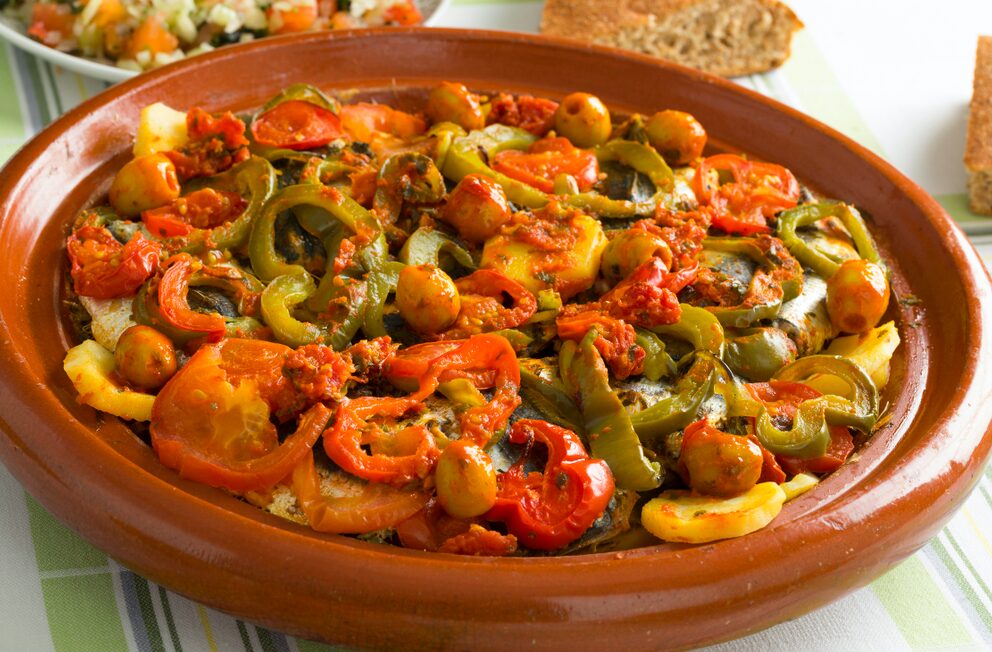
Arrange the potato slices over the bottom of a tagine or heavy-bottomed pot. Add the carrot if using it, followed by the tomato and pepper slices.
Drizzle with the olive oil and spread some of the remaining chermoula over the vegetables.
The vegetables create a flavorful base for the fish and help protect it from direct heat during cooking.
Add the Fish
Arrange the marinated fish over the vegetables.
Spoon any remaining chermoula over the fish and vegetables, distributing it evenly.
Pour approximately 100 ml of water around the sides of the tagine. Add a little more if necessary, but avoid using too much because the vegetables and fish will release their own moisture.
Cover the tagine with its lid.
If you are using a traditional clay tagine, follow its care instructions and avoid sudden temperature changes. Begin cooking over low heat and increase it gradually if appropriate for your cookware.
Cook the Fish Tagine
Place the covered tagine over low to medium-low heat.
Cook gently for approximately 30–45 minutes, depending on the thickness of the fish and the vegetables. Check the potatoes toward the end of cooking to make sure they are tender.
Keep the heat gentle and avoid stirring the fish too much, as it can break apart easily.
If the sauce becomes too dry before the potatoes are cooked, add a small splash of water around the edges.
The fish is ready when it is opaque and flakes easily with a fork. For food safety, fish should reach an internal temperature of 63°C (145°F).
Add the Olives and Preserved Lemon
During the final 10 minutes of cooking, arrange the olives and preserved lemon over the fish.
Gently spoon some of the sauce over the fish and vegetables, taking care not to break the pieces.
Allow everything to cook together until the olives are warmed through and the preserved lemon releases its fragrant citrus flavor into the sauce.
Taste the sauce and adjust the seasoning if necessary.
If you prefer a thicker sauce, remove the lid for the final few minutes and allow some excess liquid to evaporate, while making sure the fish does not overcook.
Garnish and Serve
Remove the tagine from the heat and allow it to rest for a few minutes.
Garnish with a little fresh cilantro or parsley and, if desired, a few additional lemon slices.
Bring the tagine to the table in its cooking vessel if it is safe to do so. Serve hot with fresh Moroccan bread to soak up the flavorful sauce.
The Secret to Perfect Moroccan Fish Tagine
The most important secret is to balance the chermoula, vegetables, and cooking time.
The fish needs enough seasoning to develop a distinctive Moroccan flavor, but the marinade should not overpower its natural taste. Fresh herbs, garlic, cumin, paprika, and lemon create that balance.
However, avoid overcooking the fish. Unlike meat tagines that benefit from long cooking, fish cooks relatively quickly and can become dry or fall apart if left on the heat for too long.
Another important detail is to slice the potatoes thinly and evenly. They take longer to cook than fish, so placing them at the bottom of the tagine helps them cook properly before the fish becomes overdone.
Finally, use just enough water to create a flavorful sauce. Too much liquid can dilute the chermoula, while too little can cause the vegetables to stick or burn.

How to Serve Moroccan Fish Tagine
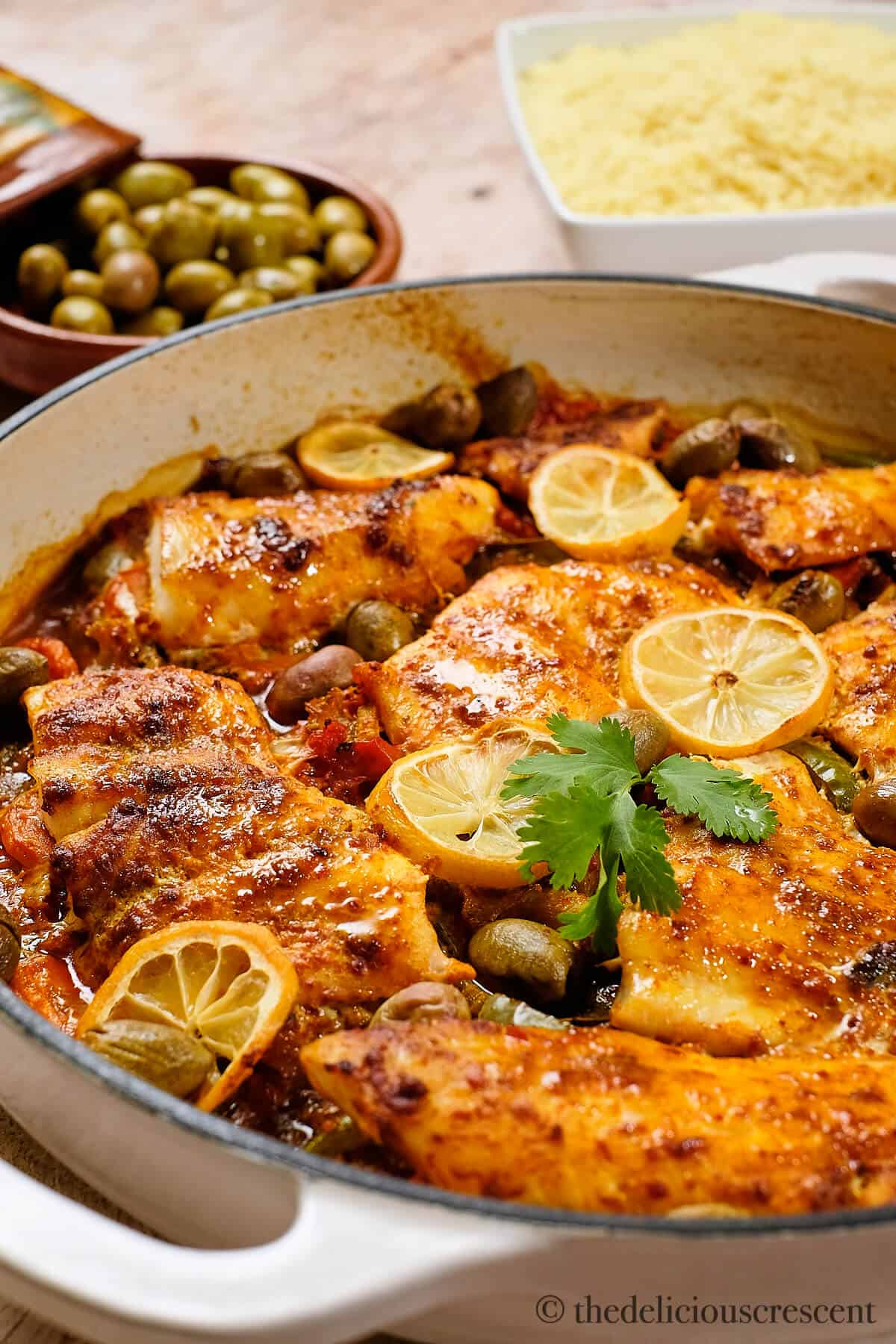
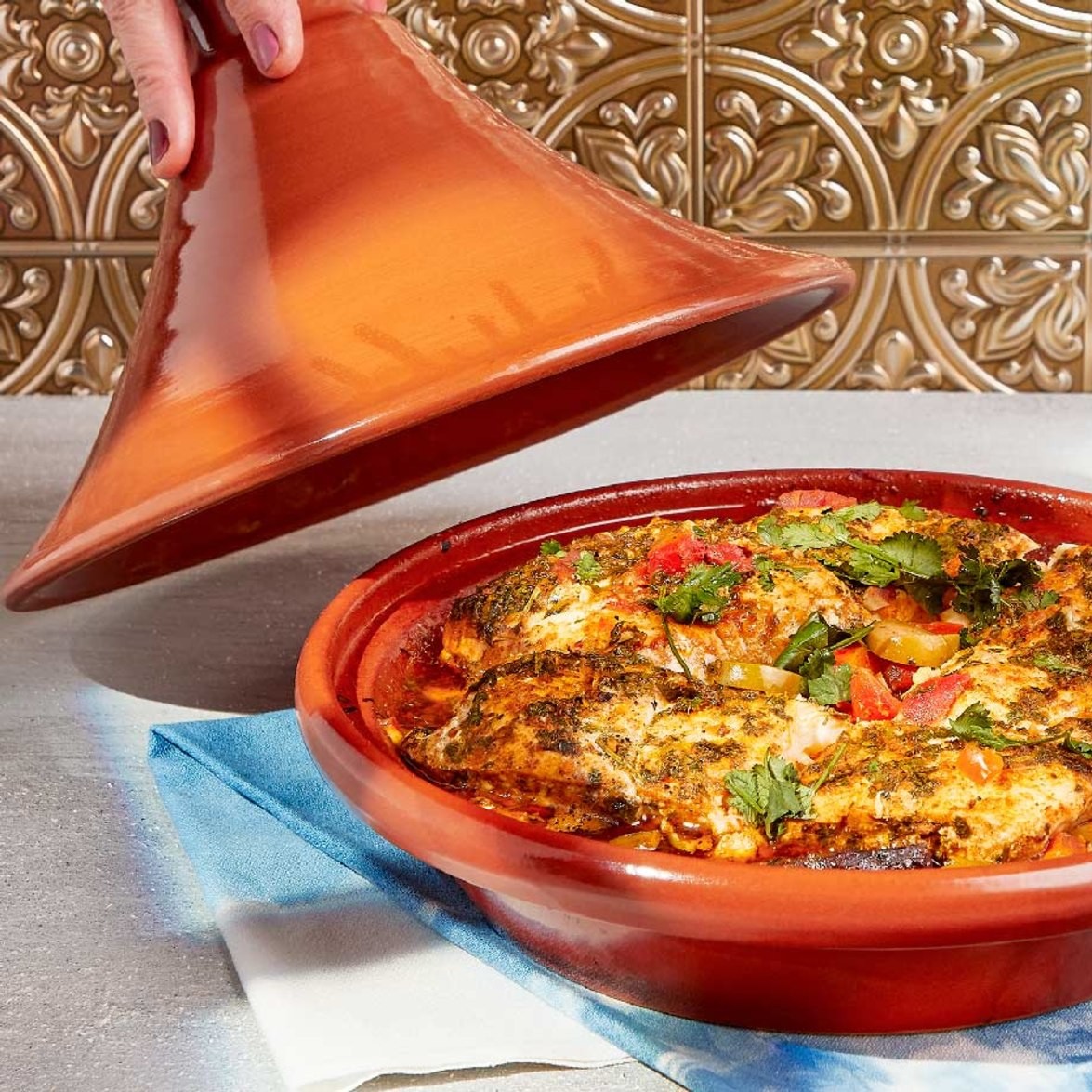
Moroccan Fish Tagine is traditionally served hot, often directly from the tagine in which it was cooked.
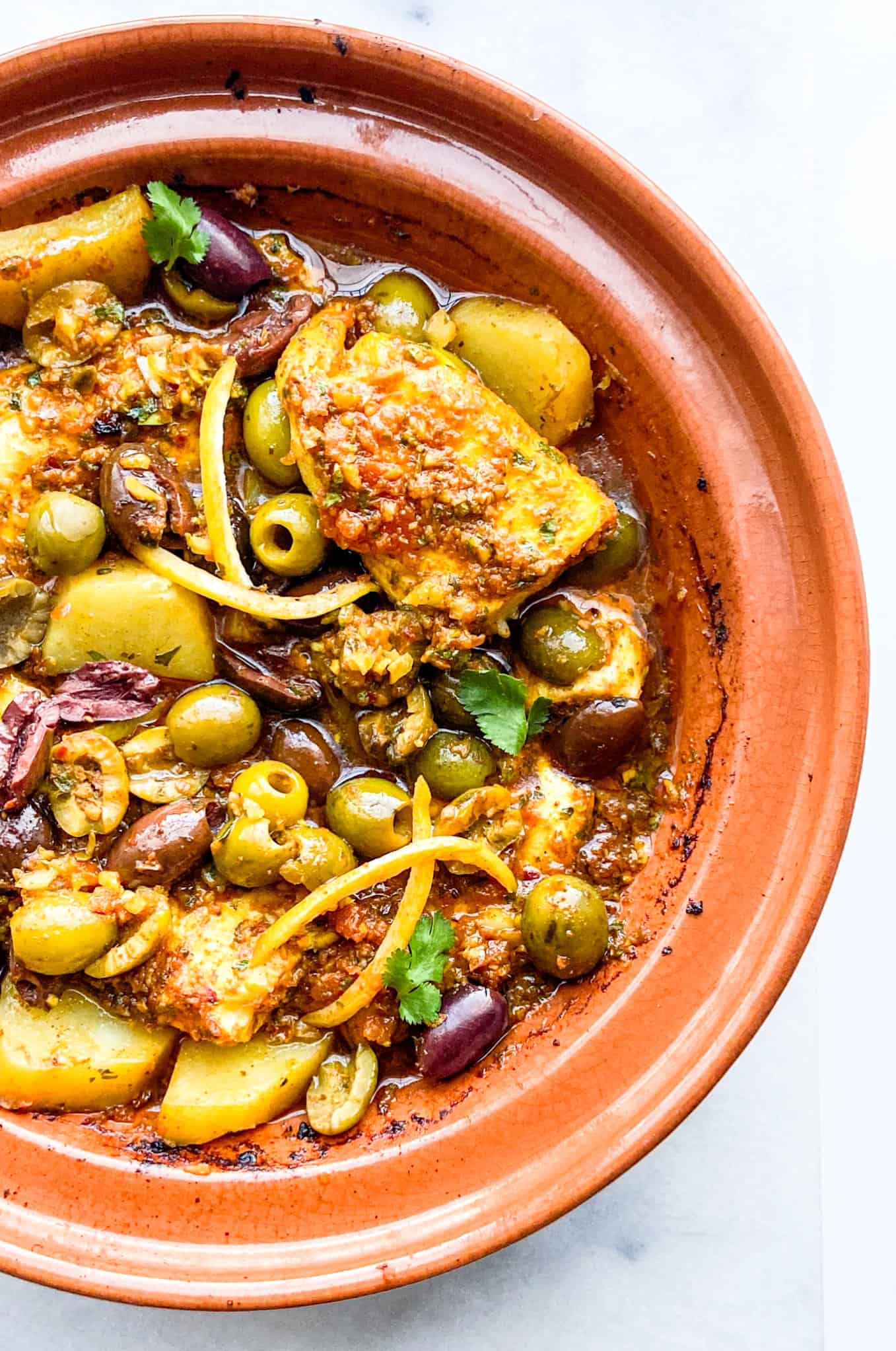
Arrange the fish in the center and surround it with the potatoes, tomatoes, peppers, olives, and preserved lemon. Spoon the sauce over the top just before serving.
Fresh Moroccan bread is the classic accompaniment. Its soft texture is perfect for absorbing the chermoula sauce.
You can also serve the dish with:
- A fresh Moroccan tomato and cucumber salad
- Extra lemon wedges
- Steamed vegetables
- A simple green salad
- Moroccan mint tea after the meal
For a traditional Moroccan presentation, place the tagine in the center of the table and allow everyone to share the fish and vegetables.
Tips for Making the Best Moroccan Fish Tagine
Use Fresh Fish When Possible
Fresh fish gives the dish a clean, delicate flavor. Sea bass, sea bream, hake, and cod are all good choices.
If you use frozen fish, thaw it completely in the refrigerator and pat it dry before marinating.
Make the Chermoula Fresh
Fresh cilantro, parsley, and garlic give chermoula its characteristic aroma. Mix the marinade shortly before cooking for the brightest flavor.
Slice the Vegetables Evenly
Thin, evenly sliced potatoes and carrots cook more consistently. This helps ensure that the vegetables become tender at approximately the same time as the fish.
Keep the Heat Gentle
A gentle simmer allows the vegetables to soften and the fish to cook without breaking apart. Excessively high heat can reduce the sauce too quickly and overcook the fish.
Add Preserved Lemon Toward the End
Adding preserved lemon during the final stage helps preserve its distinctive citrus aroma. If your preserved lemon is particularly salty, rinse it briefly before use.
Avoid Stirring the Fish
Once the fish is arranged over the vegetables, leave it mostly undisturbed. If you need to distribute the sauce, spoon it over the top rather than stirring the ingredients.
Let the Sauce Develop
The vegetables, chermoula, fish, and olives combine to create a flavorful sauce. If the sauce is too thin, remove the lid briefly near the end of cooking to allow some liquid to evaporate.
What Is Chermoula?
Chermoula is a traditional Moroccan marinade used for fish, seafood, and other dishes. It typically combines fresh cilantro, parsley, garlic, cumin, paprika, olive oil, and lemon juice.
Depending on the recipe, it may also include turmeric, ginger, chili, or other seasonings.
For Moroccan Fish Tagine, chermoula serves two purposes. First, it seasons the fish before cooking. Second, it flavors the vegetables and cooking liquid, creating a fragrant sauce that brings the whole dish together.
Although chermoula can be prepared in advance, it is easy to make fresh at home. Simply chop the herbs, crush the garlic, and mix everything with the spices, oil, and lemon juice.
Can I Make Moroccan Fish Tagine Without a Traditional Tagine?
Yes. You can prepare this recipe in a heavy-bottomed saucepan, Dutch oven, or covered casserole suitable for stovetop cooking.
Arrange the vegetables and fish in the same way, add the marinade and a little water, then cover and cook gently until the potatoes are tender and the fish is cooked through.
The shape of a traditional tagine helps circulate steam, but a regular covered pot can produce excellent results.
If you are using an oven-safe casserole, you can also cook the dish in a preheated oven at approximately 180°C (350°F). Check the vegetables and fish periodically, as cooking times may vary depending on the vessel and the thickness of the ingredients.
Can I Use Frozen Fish?
Yes. Frozen fish can be used if it is thawed completely before cooking.
Thaw it in the refrigerator, then pat it dry with paper towels. Removing excess moisture helps the chermoula adhere to the fish and prevents the sauce from becoming watery.
Firm white fish generally works best because it holds its shape during cooking.
Can I Make Moroccan Fish Tagine Without Preserved Lemon?
Yes. Preserved lemon adds a distinctive Moroccan flavor, but it is optional.
If you do not have preserved lemon, use a little fresh lemon juice or a few thin strips of lemon zest. Add them toward the end of cooking so their flavor remains fresh.
Fresh lemon will taste brighter and less salty than preserved lemon, so adjust the seasoning accordingly.
Can I Prepare Fish Tagine Ahead of Time?
You can prepare the chermoula and chop the vegetables ahead of time. Store them separately in covered containers in the refrigerator.
However, fish tagine is generally best cooked shortly before serving because fish can become dry or break apart when reheated.
If you have leftovers, refrigerate them promptly in a covered container and use them within 1–2 days. Reheat gently until steaming hot throughout, taking care not to overcook the fish.
Moroccan Fish Tagine Variations
Classic Moroccan Fish Tagine
The classic version combines white fish, chermoula, potatoes, tomatoes, peppers, olives, and preserved lemon. It is a balanced and colorful meal with traditional Moroccan flavors.
Spicy Moroccan Fish Tagine
For a little heat, add a pinch of cayenne pepper or finely chopped fresh chili to the chermoula. Adjust the amount to suit your taste.
Fish Tagine with Extra Vegetables
You can add thinly sliced carrots, zucchini, or other vegetables that cook well in a covered pot. Arrange slower-cooking vegetables at the bottom and add more delicate ingredients as needed.
Fish Tagine with Chermoula
For a stronger herb and spice flavor, coat the fish thoroughly with chermoula and reserve a little marinade for the vegetables. Avoid adding raw marinade that has touched fish to the finished dish unless it is cooked thoroughly.
Individual Fish Tagines
Instead of preparing one large tagine, make individual portions in small oven-safe dishes. Adjust the cooking time to the size of the portions and check the fish carefully to avoid overcooking.
Frequently Asked Questions
What fish is best for Moroccan Fish Tagine?
Firm white fish such as sea bass, sea bream, hake, and cod are excellent choices. They hold their shape during cooking and absorb the flavor of the chermoula.
What spices are used in Moroccan Fish Tagine?
Common seasonings include cumin, paprika, garlic, black pepper, cilantro, parsley, and lemon juice. Some recipes also use ginger, turmeric, chili, or saffron.
Is Moroccan Fish Tagine spicy?
Traditional Moroccan Fish Tagine is usually aromatic rather than very hot. You can add chili or cayenne pepper if you prefer a spicier dish.
Why is my fish falling apart?
Fish may fall apart if it is overcooked, stirred too frequently, or handled roughly. Arrange it over the vegetables and spoon sauce over the top instead of stirring.
Why are my potatoes still hard?
The potatoes may be too thick or may not have cooked long enough. Slice them thinly and evenly, arrange them at the bottom of the tagine, and make sure there is enough moisture for them to cook.
Can I use salmon instead of white fish?
Yes. Salmon can be used, although it has a richer flavor and softer texture than many traditional white fish options. Cut it into thick portions and reduce the cooking time as necessary.
What is the difference between fish tagine and fish chermoula?
Chermoula is the herb-and-spice marinade used to season the fish. Fish tagine is the complete dish, which typically includes the marinated fish, vegetables, and cooking sauce.
Can I freeze Moroccan Fish Tagine?
Freezing is possible, but the texture of the fish and potatoes may change after thawing. For the best quality, prepare and enjoy the dish fresh whenever possible.
Nutrition Information
Approximate nutrition per serving:
- Calories: 300–400 kcal
- Protein: 30–40 g
- Carbohydrates: 20–30 g
- Fat: 10–18 g
- Saturated Fat: 2–4 g
- Fiber: 4–6 g
- Sugar: 5–8 g
- Sodium: 500–800 mg
Nutrition values are estimates and vary depending on the type of fish, amount of olive oil, quantity of potatoes, and salt content of the olives and preserved lemon. Serving bread will increase the total calories and carbohydrates.
More Moroccan Recipes to Try
If you enjoyed this Moroccan Fish Tagine, explore these other traditional Moroccan dishes:
Chicken with Olives and Preserved Lemons
A classic Moroccan chicken dish featuring aromatic spices, tender onions, briny olives, and preserved lemon.
Djaj Mhammer
Traditional Moroccan chicken seasoned with fragrant spices and cooked until tender with a beautifully golden finish.
Moroccan Msemen
Flaky, layered Moroccan flatbread that is delicious alongside flavorful sauces.
Moroccan Harira
A comforting tomato, lentil, and chickpea soup seasoned with herbs and spices.
Moroccan Mint Tea
The classic Moroccan drink to serve after a delicious meal.
Moroccan Fekkas
Crunchy, twice-baked Moroccan cookies that pair perfectly with mint tea.
Final Thoughts
Moroccan Fish Tagine is a wonderful example of the fresh ingredients and aromatic seasonings that make Moroccan cuisine so special.
The combination of tender fish, homemade chermoula, soft vegetables, olives, and preserved lemon creates a flavorful meal that is both comforting and colorful.
Furthermore, the recipe is flexible enough to prepare in a traditional tagine or a regular covered pot, making it accessible for home cooks everywhere.
Whether you serve it for a family lunch, a weekend gathering, or a special dinner, this Moroccan Fish Tagine brings a taste of Morocco to your table.
Overall, the key to success is to season the fish well, cook the vegetables until tender, and handle the fish gently so it remains moist and flaky.
Serve it hot with fresh Moroccan bread, share it with family and friends, and enjoy this delicious traditional Moroccan dish. 🇲🇦🐟🍋




Leave a Reply